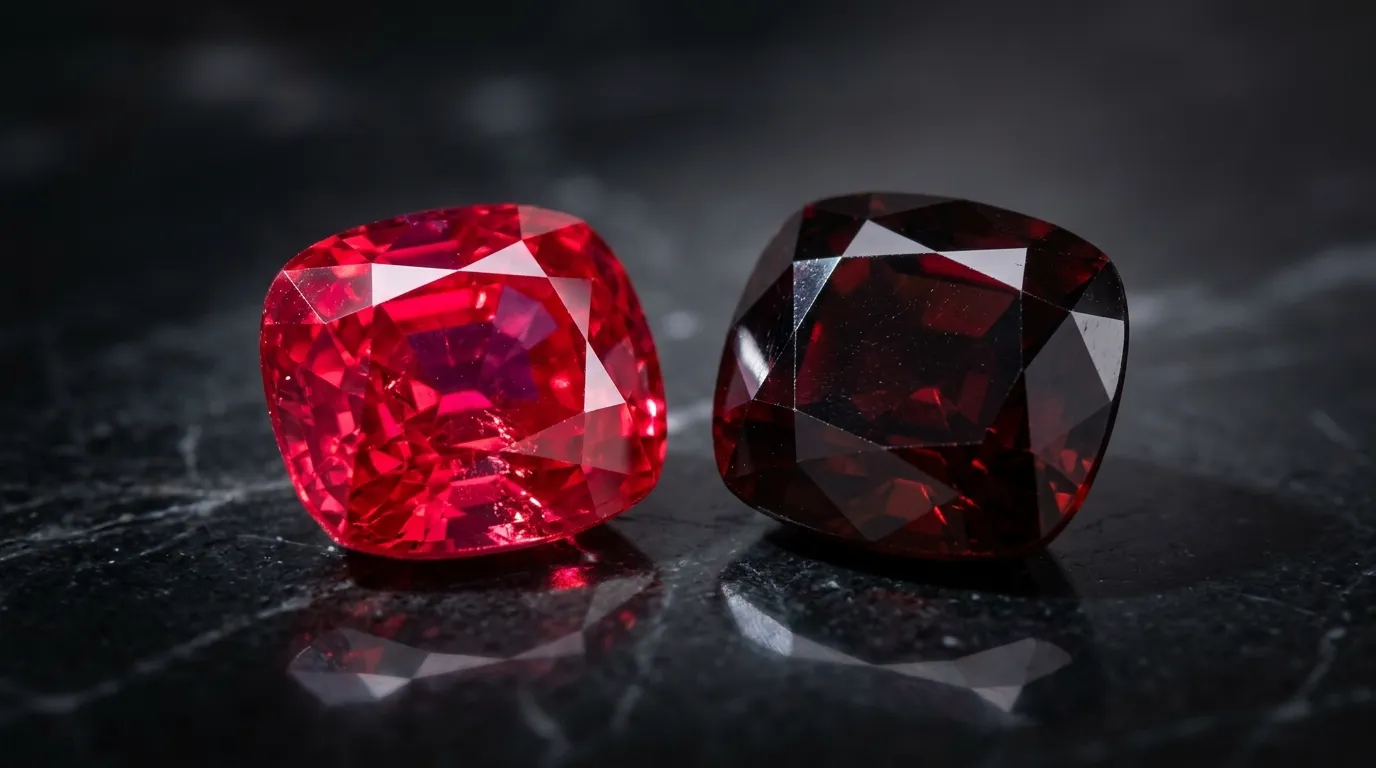
I still remember the moment I almost made a very expensive mistake.
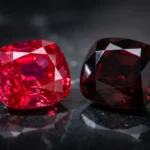
It was my mother’s 60th birthday, and I had saved up for months to buy her something special a deep red gemstone ring. The jeweler placed two rings side by side. Both were stunning. Both were rich, vibrant red. The price difference? Nearly $800.
“This one’s a ruby,” he said. “And that one’s a garnet.”
I had no idea they were different stones. I genuinely thought “garnet” was just another word for a darker ruby. Many people do. And that confusion that honest, understandable mix-up — is exactly why so many buyers end up overpaying, underpaying, or walking away with the wrong stone for the wrong reason.
Ruby and garnet look shockingly similar on first glance. Both are red. Both are used in rings, necklaces, and earrings. Both have deep historical roots. But they are completely different gemstones with very different prices, properties, and purposes.
Choosing between them matters more than most beginners realize. One is among the rarest and most valuable gems on earth. The other is one of the most accessible beautiful stones you can buy. Getting them mixed up could cost you hundreds or leave you with a stunning gem that cost far less than it should have.
This guide explains everything in simple English with practical examples so you can clearly understand the real difference.
What Is Ruby?
Ruby is a precious gemstone and one of the four classic precious stones alongside diamonds, emeralds, and sapphires. Chemically, it is a variety of corundum (aluminum oxide) that gets its iconic red color from the presence of chromium. The more chromium, the deeper and richer the red.
The name comes from the Latin word ruber, meaning red.
Rubies have been treasured for thousands of years. Ancient Burmese warriors believed rubies made them invincible in battle. In Sanskrit texts, ruby was called ratnaraj the king of precious stones. Today, fine rubies from Myanmar (formerly Burma) are considered among the most valuable gemstones in the world, sometimes fetching prices that rival or exceed diamonds.
The color range in rubies goes from pinkish-red to deep blood-red. The most prized shade is called “pigeon’s blood” a vivid, intense red with a slight blue undertone. Anything too pink is often classified as a pink sapphire rather than a ruby.
Rubies score 9 on the Mohs hardness scale second only to diamond. That makes them exceptionally durable for everyday jewelry. They resist scratching, hold up well over decades, and maintain their brilliance with basic care.
Who buys rubies? Serious jewelry collectors. Couples choosing engagement rings. Investors looking for gemstones that hold or increase in value. People who want something rare, meaningful, and genuinely precious.
What Is Garnet?
Garnet is not a single stone it is actually a group of silicate minerals that share a similar crystal structure but come in many different colors. The word “garnet” covers more than 20 species, including pyrope, almandine, spessartine, grossular, andradite, and uvarovite.
The most common variety the one people picture when they hear “garnet” is deep red almandine or pyrope garnet. But garnets also come in orange, yellow, green, purple, pink, and even colorless. The rare Demantoid garnet (green) and Tsavorite (vivid green) are among the most expensive garnets available.
The name likely comes from the Latin granatum, meaning pomegranate a reference to the bright red seeds that resemble garnet crystals.
Garnets have been used in jewelry since the Bronze Age. Ancient Egyptians used them in necklaces and carvings. Victorian-era jewelry is famous for its deep red pyrope garnet clusters. Today, garnets are loved for their beauty, affordability, and surprising variety.
Garnet hardness ranges from about 6.5 to 7.5 on the Mohs scale softer than ruby, but still durable enough for most jewelry applications. With proper care, garnet jewelry lasts a lifetime.
Who buys garnets? Budget-conscious jewelry lovers. People who want the look of red gemstone jewelry without the high price. Gift-givers on a reasonable budget. Collectors exploring the wide variety of garnet types and colors.
Quick Comparison Table
| Feature | Ruby | Garnet |
|---|---|---|
| Mineral Type | Corundum (aluminum oxide) | Silicate mineral group |
| Color Range | Pink-red to deep blood-red | Red, orange, yellow, green, purple, colorless |
| Hardness (Mohs) | 9 | 6.5 – 7.5 |
| Rarity | Very rare (fine quality) | Common to moderately rare |
| Price Range | $300 – $100,000+ per carat | $5 – $7,000+ per carat |
| Luster | Vitreous (glassy) | Vitreous to resinous |
| Durability | Excellent | Good to Very Good |
| Investment Value | High | Low to Moderate |
| Best Use Case | Fine jewelry, heirlooms, investment | Fashion jewelry, everyday wear, gifts |
| Most Valuable Variety | Burmese pigeon’s blood ruby | Demantoid or Tsavorite garnet |
The Biggest Difference Between Ruby and Garnet
The single most important difference is value and rarity.
Ruby is one of the rarest colored gemstones on earth. A fine-quality, untreated Burmese ruby of even one carat can cost more than a comparable diamond. The supply is genuinely limited the best rubies come from a handful of mines, and gem-quality stones are extremely scarce.
Garnet, on the other hand, is abundant. The common red varieties almandine and pyrope are found all over the world and are relatively inexpensive. A beautiful, well-cut red garnet can cost as little as $20–$50 per carat for standard quality.
This matters most when you are buying or selling jewelry. A ring that looks identical to a trained eye might be worth $150 with a garnet or $3,000 with a ruby. For everyday wear, the difference might feel irrelevant. For an heirloom, an investment piece, or a gift with deep meaning it matters enormously.
Key Differences Explained
1. Chemical Composition
Ruby
Ruby is a variety of corundum aluminum oxide (Al₂O₃) with chromium impurities that create the red color. It belongs to the same mineral family as sapphire. In fact, the only difference between a ruby and a blue sapphire is the trace element causing the color.
- Pure corundum is colorless
- Chromium = red (ruby)
- Iron + titanium = blue (sapphire)
Garnet
Garnet is a silicate mineral group with the general formula X₃Y₂(SiO₄)₃. Different garnet species have different chemical compositions:
- Pyrope: Mg₃Al₂(SiO₄)₃
- Almandine: Fe₃Al₂(SiO₄)₃
- Spessartine: Mn₃Al₂(SiO₄)₃
Real-world impact: This is why rubies and garnets behave differently under heat, light, and chemical exposure. Understanding the chemistry helps jewelers identify them quickly.
2. Color and Appearance
Ruby
- Color range: pinkish-red to deep blood-red
- The most prized color is “pigeon’s blood” pure red with a hint of blue
- Under strong light, some rubies show fluorescence (a glowing quality)
- Color is vivid, saturated, and uniform in high-quality stones
Garnet
- Red garnets can look nearly identical to rubies in low light
- Pyrope garnet tends toward darker, cooler reds
- Almandine often shows slight orange or brown undertones
- Garnet typically does NOT fluoresce under UV light this is one of the quickest tests
One small difference most people overlook: Hold both stones under natural sunlight. A ruby often glows with an almost inner fire. A garnet in the same light may look slightly darker or more muted by comparison.
3. Hardness and Durability
Ruby
- Mohs hardness: 9
- Extremely scratch-resistant
- Suitable for rings, bracelets even items that receive daily wear and abrasion
- Only diamond (10) and moissanite (9.25) are harder
Garnet
- Mohs hardness: 6.5–7.5 depending on variety
- Can be scratched by harder materials (quartz, topaz, corundum)
- Best suited for earrings, pendants, necklaces items with less direct abrasion
- With proper care, garnet jewelry lasts well
Practical trade-off: If you want a red gemstone ring for everyday wear especially if you work with your hands ruby holds up significantly better over time. Many people later regret choosing garnet for an engagement ring after noticing surface scratches after a few years.
4. Price and Value
Ruby
- Commercial quality: $300–$3,000 per carat
- Fine Burmese ruby: $3,000–$30,000+ per carat
- Record auction prices: Over $1 million per carat for exceptional stones
- Value increases significantly with quality, origin, and lack of treatment
Garnet
- Common red garnet: $5–$150 per carat
- Fine quality pyrope or almandine: $50–$500 per carat
- Rare varieties (Demantoid, Tsavorite): $500–$7,000+ per carat
- Excellent value for budget-conscious buyers
This matters more than many beginners realize. If a seller offers you a “ruby” at a suspiciously low price — $30, $50, even $100 for a nice stone it is almost certainly a garnet. Genuine rubies are never cheap.
5. Rarity
Ruby
- Gem-quality rubies are among the rarest colored stones
- The finest come from Myanmar, Mozambique, and Sri Lanka
- Many mines are nearly depleted
- Unheated (untreated) rubies command significant premiums
Garnet
- Red garnets are found on every continent
- Major deposits in India, Africa, Sri Lanka, Brazil, and the USA
- Very common not considered a rare gemstone in standard varieties
- Some garnet varieties (Demantoid, Paraiba-type) are genuinely rare
6. Treatment and Enhancement
Ruby
- Most commercial rubies are heat-treated to improve color and clarity
- Fracture-filling with glass is common in lower-grade stones
- Unheated rubies with certification command 30–50% price premiums
- Always ask for a gemological report (GIA, AGL) when buying fine rubies
Garnet
- Garnets are rarely treated what you see is almost always natural
- No heating, filling, or chemical enhancement is typically needed
- This “what you see is what you get” quality appeals to buyers who value natural stones
- Some collectors prefer garnet for this reason
7. Symbolism and Meaning
Ruby
- Symbol of passion, love, protection, and power
- January is NOT ruby’s birthstone ruby is July’s birthstone
- Associated with royalty, courage, and life force
- Gifted for 40th wedding anniversaries
- Used in engagement rings as an alternative to diamonds
Garnet
- January’s birthstone
- Symbol of friendship, trust, and safe travel
- Historically gifted to travelers for protection
- Associated with commitment and devotion
- Popular for thoughtful gifts between close friends
8. How to Tell Them Apart
There are several practical ways to distinguish ruby from garnet:
Under UV Light
- Ruby: Often shows strong red fluorescence
- Garnet: Shows little to no fluorescence
Under a Loupe or Magnification
- Ruby: May show silk-like inclusions (rutile needles), fingerprint patterns
- Garnet: Often cleaner, but may show rounded crystals or stress fractures
Color in Different Lighting
- Ruby: Holds color under all light types; may deepen under incandescent
- Garnet: Can shift slightly; some garnets show a dramatic color change (alexandrite-like)
With a Refractometer (Professional Tool)
- Ruby refractive index: 1.762–1.770
- Garnet refractive index: 1.714–1.888 depending on variety
Practical tip: Never try to tell them apart with the naked eye alone. Even experienced gemologists use instruments. If it matters get it tested.
9. Investment Potential
Ruby
- Fine rubies have consistently appreciated in value
- Considered a hard asset like gold
- Auction records broken repeatedly in recent decades
- Safe long-term investment for serious collectors
Garnet
- Most garnets do not appreciate significantly in value
- Rare varieties (Demantoid, Tsavorite) can hold value
- Not typically considered an investment gemstone
- Better seen as beautiful, wearable jewelry than financial asset
Similarities Between Ruby and Garnet
Despite their differences, ruby and garnet share several things:
- Both are natural gemstones formed deep in the earth under intense pressure
- Both display beautiful red hues that have captivated humans for thousands of years
- Both are used extensively in fine and fashion jewelry
- Both are found in similar geographic regions Sri Lanka, India, East Africa
- Both require similar care: avoid harsh chemicals, store separately, clean gently
- Both have rich cultural histories across multiple civilizations
- Both are cut in similar shapes oval, round, cushion, pear for jewelry settings
- Both can be synthetic or lab-created versions exist in the market
The visual similarity is the reason the confusion exists in the first place and it is a completely reasonable confusion to have.
Pros and Cons
Pros of Ruby
- Exceptional hardness ideal for all jewelry types
- Rare and genuinely precious
- Strong investment value
- Deep cultural significance and prestige
- Vivid, lasting color with excellent brilliance
- Pairs beautifully with diamonds and gold
Cons of Ruby
- Very expensive fine quality is out of reach for most budgets
- Most commercial stones are treated finding untreated gems requires effort
- Synthetic rubies flood the market easy to be deceived without testing
- Requires gemological certification to buy with confidence
Pros of Garnet
- Very affordable accessible at almost any budget
- Natural and usually untreated what you see is genuine
- Wide color variety not limited to red
- Beautiful brilliance and color depth
- Widely available from reputable sellers
- January birthstone perfect for meaningful gifts
Cons of Garnet
- Softer than ruby not ideal for high-abrasion settings like everyday rings
- Little investment value for common varieties
- Often mistaken for ruby which cuts both ways (can be deceiving)
- Some varieties can have visible inclusions
Which Is Better for Different Situations?
For jewelry buyers on a budget: Garnet is the clear winner. You can get a stunning, high-quality red gemstone ring for a fraction of ruby’s price. For fashion jewelry, garnet is an excellent choice.
For engagement rings: Ruby, if budget allows. Its hardness makes it practical for daily wear. A beautiful ruby also carries far more symbolic weight and longevity as an heirloom. If budget is tight, choose garnet but understand it needs gentler care.
For serious collectors and investors: Ruby, without question. Fine rubies from reputable sources with gemological certification are finite, valuable, and historically appreciating assets.
For gift-giving: Garnet works beautifully for birthdays (especially January), friendship gifts, and meaningful occasions where the symbolism matters more than the price tag.
For everyday wearers: Ruby’s hardness makes it practical. But garnet if worn in lower-abrasion settings like earrings or pendants is a wonderful, worry-free choice.
For long-term heirloom pieces: Ruby. Something you intend to pass down for generations should be both durable and valuable. Ruby excels on both counts.
Common Mistakes People Make
Assuming low price means good deal: If someone sells you a “ruby” for $30–$50, it is not a ruby. Genuine rubies are expensive. Period. Many buyers discover this truth after paying resale prices.
Choosing garnet for an everyday ring: Garnet is beautiful but softer. People who wear garnet rings daily often notice scratching within a few years. It is better suited for pendants and earrings.
Skipping gemological testing: Even experienced buyers get fooled. If you’re spending significant money on a red gemstone, always get it tested or buy with a GIA or AGL certificate.
Confusing synthetic ruby with natural garnet: The market has synthetic rubies that look perfect and cost very little. Some buyers think they’re getting natural garnet when they’re actually getting lab-created ruby — which has different implications for value.
Ignoring color shifts in garnet: Some garnets are remarkable the rare color-change garnet shifts dramatically under different light. Not knowing this means buyers can overpay or underpay significantly.
Buying online without verification: Both stones are easy to misrepresent online. Always buy from reputable sellers with clear return policies and, for significant purchases, request third-party certification.
Expert Recommendation
Choose Ruby if:
- Budget allows for genuine precious gemstone quality
- You want a durable stone for an engagement ring or daily-wear piece
- You’re buying as a long-term investment or heirloom
- You want the prestige and rarity of a true precious gemstone
- You are buying for someone who values fine jewelry deeply
Choose Garnet if:
- You want beautiful red gemstone jewelry on a reasonable budget
- You’re buying earrings, pendants, or occasional-wear jewelry
- You want a January birthstone gift
- You appreciate natural, untreated stones
- You want variety — orange, green, purple garnets are breathtaking
Avoid Ruby if:
- Your budget is limited — a cheap “ruby” is almost never real
- You cannot verify the stone with certification
- You’re buying purely for aesthetic reasons and don’t need the investment quality
Avoid Garnet if:
- You need maximum durability for a ring worn daily with hands-on work
- You want something with long-term financial value
- You are buying an heirloom piece meant to appreciate over generations
Final Verdict
After years of handling and studying both stones, here is the honest truth:
Ruby and garnet are both genuinely beautiful. Neither is “better” in an absolute sense. They serve different purposes, fit different budgets, and carry different meanings.
Ruby is for the person who wants something rare, durable, and truly precious — a gemstone with thousands of years of royal history, real investment potential, and the kind of depth that only comes from genuine rarity. It is an emotional and financial commitment, and it rewards that commitment.
Garnet is for the person who appreciates natural beauty without the premium price — who wants a stunning red (or orange, or green) gemstone they can wear freely, gift generously, and enjoy without anxiety. It is honest, accessible, and often strikingly beautiful in its own right.
The confusion between them is understandable. The difference, once you know it, is significant. Choose with your eyes open, buy from reputable sources, and never hesitate to ask for verification when real money is involved.
FAQ Section:
Q: Is garnet a fake ruby?
No. Garnet is a completely separate, natural gemstone with its own identity, history, and value. It is not an imitation or fake — it is simply a different stone. Many people confuse the two because both can be deep red, but they have different chemical compositions, hardness levels, and prices.
Q: Which is more expensive — ruby or garnet?
Ruby is significantly more expensive in virtually all comparable cases. A fine-quality ruby can cost $3,000–$30,000 per carat or more. A comparable red garnet of similar size typically costs $50–$300 per carat. The price gap reflects ruby’s rarity, hardness, and status as a precious gemstone.
Q: Can a jeweler tell ruby from garnet just by looking?
An experienced gemologist can often make a strong educated guess based on color, luster, and inclusions. However, for definitive identification, professional testing — including a refractometer, spectroscope, or UV light test — is needed. Visual identification alone is unreliable, especially with well-cut stones.
Q: Is garnet worth buying?
Absolutely. Garnet offers excellent value, natural beauty, and a wide range of colors and varieties. For fashion jewelry, gifts, and everyday wear, garnet is a wonderful choice. It is not an investment stone, but it is a genuinely beautiful, natural gemstone that deserves more appreciation than it often gets.
Q: Are rubies always red?
Yes — by definition. If a corundum gemstone is any color other than red, it is classified as sapphire. Rubies range from pinkish-red to deep blood-red. Very pale stones are often classified as pink sapphire rather than ruby, which is a nuanced and somewhat debated distinction in gemology.
Q: Do garnets come in colors other than red?
Yes — garnets come in nearly every color. Orange spessartine, vivid green Tsavorite and Demantoid, purple rhodolite, yellow Mali garnet, and even color-change garnets all exist. The red variety is simply the most common and well-known. Many people are surprised to learn that some of the rarest garnets are green.
Q: How do I care for ruby and garnet jewelry?
Both benefit from similar care: avoid harsh chemicals, remove before heavy physical work, store separately from harder stones to prevent scratching, and clean gently with mild soap and warm water. Ruby’s superior hardness makes it slightly more forgiving, but both stones reward careful treatment.
Q: Can garnet be confused with other red gemstones besides ruby?
Yes. Garnet is sometimes confused with spinel, red tourmaline, carnelian, and even glass imitations. Spinel in particular was historically confused with both ruby and garnet — the famous “Black Prince’s Ruby” in the British Crown Jewels is actually a red spinel. Always verify important purchases with professional testing.
Conclusion:
Ruby and garnet are two of history’s most beloved red gemstones and two of the most commonly confused. Ruby stands apart as a rare, exceptionally hard, and genuinely precious gemstone with real investment value and centuries of royal prestige.
Garnet offers something different: natural beauty, remarkable color variety, honest value, and accessibility that makes it one of the most rewarding gemstones for everyday buyers.
Understanding the difference protects you as a buyer, helps you choose wisely as a gift-giver, and deepens your appreciation for both stones on their own terms. Whether you invest in a fine Burmese ruby or choose a vivid red pyrope garnet for someone you love, you are selecting something with genuine history, beauty, and meaning.
Buy from trusted sources. Ask for certification when it matters. And enjoy whichever stone speaks to you.

I am William Strunk Jr an American professor of English and the author of the classic style guide the Elements of Style. He emphasized clarity, brevity, and proper grammar in writing, influencing generations of writers. Learn more about his work and writing tips at wordrar.com.