I remember standing in the supplement aisle at my local pharmacy, staring at two bottles for what felt like forever. One said “Biotin for Hair Growth.” The other said “Collagen for Skin and Joints.” Both promised beautiful results. Both were expensive. And I had absolutely no idea which one to pick.
Sound familiar?
Most people end up buying whichever one has prettier packaging or a bigger discount. But the difference between biotin and collagen is actually very real, and choosing the wrong one can mean spending months taking a supplement that does almost nothing for your specific goal.
This guide explains everything in simple English with practical examples so you can clearly understand the real difference.
What Is Biotin?
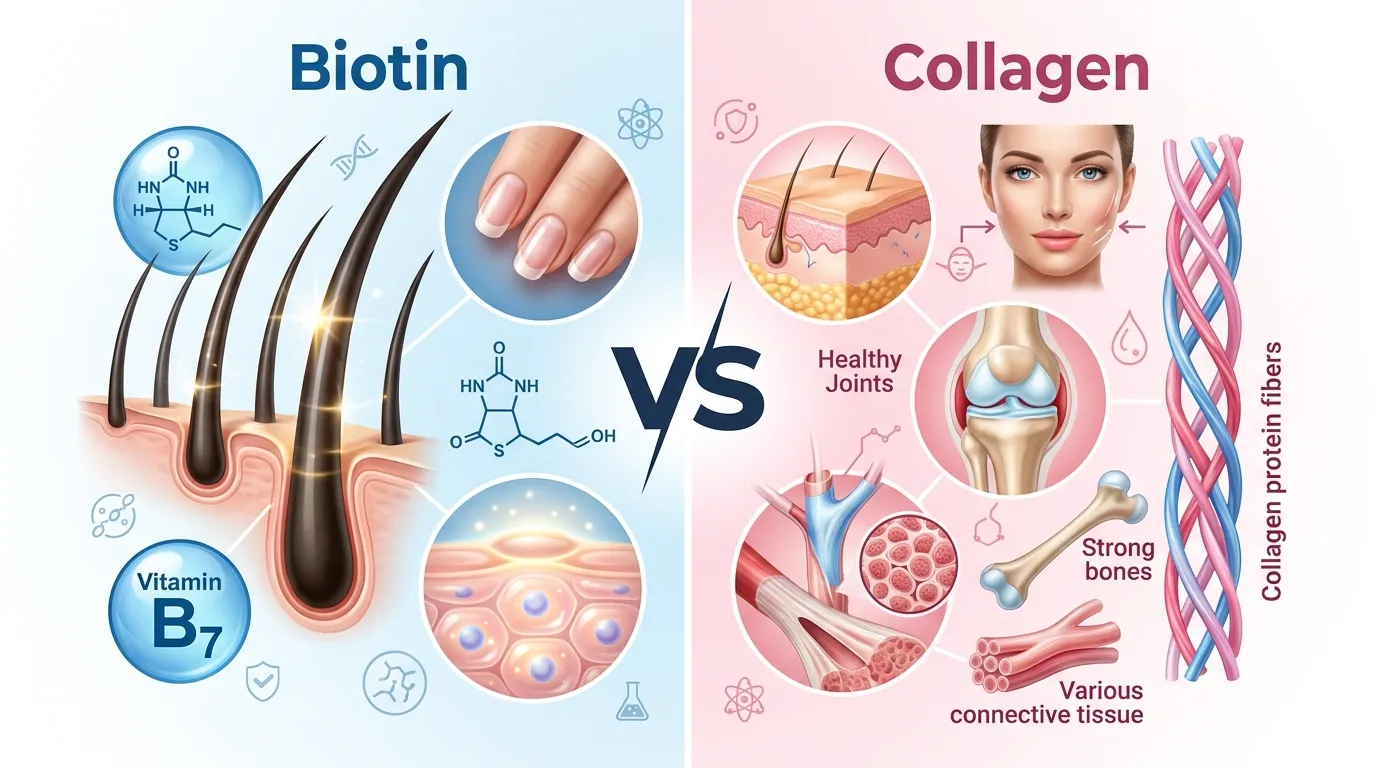
Biotin is a B vitamin. Specifically, it is vitamin B7. Your body uses it to convert food into energy and to support the health of your hair, skin, and nails.
It is water-soluble, which means your body does not store it for long. You need a steady supply from food or supplements.
Your body uses biotin to build a protein called keratin. Keratin is the structural material that makes up your hair strands, your fingernails, and the outer layer of your skin. When biotin levels drop, keratin production weakens, and hair starts to thin or break more easily.
Most people get enough biotin from food. Eggs, nuts, seeds, salmon, and sweet potatoes are all good natural sources. However, people who have a deficiency, follow restrictive diets, or have certain genetic conditions may not produce or absorb enough.
Biotin supplements became enormously popular over the past decade largely because of social media. Influencers credited biotin for thick, glossy hair and strong nails. The truth is more nuanced, which we will get into shortly.
In real-world use, biotin works best for people whose hair or nail problems are actually caused by a nutritional gap. If your levels are already normal, adding more biotin on top may not produce dramatic changes.
What Is Collagen?
Collagen is a protein. In fact, it is the most abundant protein in the human body. It is the main structural component of your skin, bones, tendons, cartilage, and connective tissue.
Think of collagen as the scaffolding that keeps everything firm and connected. Your skin’s plumpness and elasticity depend on it. Your joints need it to move smoothly without pain. Your gut lining relies on it for integrity.
Your body naturally produces collagen on its own. But starting around your mid-20s, production begins to slow down. By the time most people reach their 40s or 50s, they have lost a noticeable amount, which shows up as wrinkles, sagging skin, stiffer joints, and slower recovery from physical activity.
Collagen supplements are typically derived from animal sources like bovine (cow) connective tissue, chicken cartilage, or marine (fish) skin. When you take a hydrolyzed collagen supplement, the protein is broken down into smaller peptides that your body can absorb and use.
Research on collagen supplementation has grown significantly in recent years. Studies have shown benefits for skin hydration and elasticity, joint comfort, and bone density support. Many athletes use it specifically for recovery and joint health.
Unlike biotin, collagen is not a vitamin. It is a direct structural protein, and the body uses it in a completely different way.
Quick Comparison Table
| Feature | Biotin | Collagen |
|---|---|---|
| Type | B Vitamin (B7) | Structural Protein |
| Main Function | Energy metabolism, keratin production | Skin firmness, joint support, tissue repair |
| Primary Benefit | Hair and nail strength | Skin elasticity, joint health, gut lining |
| Who Needs It | People with nutritional deficiency or poor diet | Adults experiencing aging effects or joint wear |
| Source | Found in eggs, nuts, seeds, liver | Animal tissue (bovine, marine, chicken) |
| Supplement Form | Capsule, gummy, tablet | Powder, capsule, liquid |
| Backed by Research | Limited for healthy individuals | Growing evidence for skin and joints |
| Vegan-Friendly | Yes | Mostly no (plant-based collagen boosters exist) |
| Water or Fat Soluble | Water-soluble | Not applicable (it is a protein) |
| Affects Hair | Yes, through keratin support | Indirectly, through scalp and follicle health |
| Affects Skin | Yes, surface texture | Yes, deeper structural firmness |
| Affects Joints | No | Yes, cartilage and mobility |
| Cost Range | Affordable | Moderate to higher |
| Timeline for Results | 2 to 4 months | 2 to 6 months |
Read More Posts:
- Difference Between OCD and ADHD:(Key Symptoms Explained)
- Difference Between Mayo and Mayonnaise:(What You Need to Know)
- Difference Between Bleach and Chlorine:(Simple Guide)
- Difference Between Bayou and Swamp:(With Easy Examples)
The Biggest Difference Between Biotin and Collagen
Many people first assume biotin and collagen do the same job because both are marketed for hair and skin. But they work at completely different levels in the body.
Biotin works at the cellular and metabolic level. It helps your body produce keratin, which is the protein that physically makes up hair strands and nails. Without adequate biotin, your body cannot build strong keratin.
Collagen works at the structural and tissue level. It holds your skin together from the inside, cushions your joints, and supports the connective tissue throughout your entire body. Without enough collagen, your skin loses firmness and your joints start to ache.
The simplest way to understand this: biotin feeds the factory that makes your hair. Collagen is the material that builds the house your skin lives in.
This distinction matters more than many beginners realize. If you are 25 and your hair is falling out because of stress or poor nutrition, biotin might help. If you are 45 and noticing fine lines and joint stiffness, collagen is probably the better choice.
Key Differences Explained
1. What They Are
Biotin is a water-soluble vitamin. Your body cannot make it, so you must consume it through diet or supplements. Collagen is a structural protein your body naturally produces, but production slows with age, stress, sun exposure, and poor sleep.
2. How They Affect Hair
Biotin supports hair by helping the body produce keratin, the exact protein that hair is made from. People with low biotin may experience thin, brittle, or slow-growing hair.
Collagen affects hair differently. It provides amino acids like proline, which the body can use to build keratin. Collagen also supports the dermis, the layer of skin that houses hair follicles. Healthier follicles tend to produce stronger hair.
Both can improve hair health, but through separate pathways.
3. How They Affect Skin
Biotin helps with surface skin texture. People with deficiency sometimes notice dry, flaky, or irritated skin when their biotin is low.
Collagen works on the deeper structural layer of the skin. It is responsible for the firmness, bounce, and hydration levels that make skin look youthful. As collagen declines with age, the skin starts to sag, wrinkle, and lose plumpness. No amount of biotin replaces what collagen does at this deeper level.
4. Joint and Bone Health
This is one area where the two are completely different. Biotin has no meaningful role in joint health or bone density. Collagen, on the other hand, makes up a significant portion of cartilage. Supplementing with collagen has shown real benefits for people with knee discomfort, athletic recovery, and early signs of joint stiffness.
Many runners, gym-goers, and people over 40 take collagen specifically for this reason.
5. Gut Health
Collagen plays an important role in the gut lining. The amino acids in collagen, particularly glycine and glutamine, support the integrity of the intestinal wall. Many people dealing with digestive sensitivity report that collagen supplements help with discomfort.
Biotin has no equivalent benefit for gut structure. It supports metabolism, but it does not repair or strengthen gut tissue.
6. Research and Evidence
One small difference most people overlook is how different the research landscapes are for each supplement.
Biotin research largely shows that supplementation is effective only in people who are actually deficient. Healthy individuals with normal biotin levels do not experience dramatic hair or nail improvements.
Collagen research has grown considerably. Multiple clinical trials have shown skin improvements in hydration, elasticity, and wrinkle reduction. Several studies have also shown reduced joint pain in athletes and people with osteoarthritis.
7. Dietary Sources
Biotin is found in eggs (especially egg yolks), almonds, walnuts, sunflower seeds, salmon, sweet potatoes, and dairy products.
Collagen comes almost entirely from animal-based foods. Bone broth is the most well-known source. Chicken skin, pork skin, and fish are also high in collagen. Vitamin C, zinc, and copper help the body produce its own collagen, so eating citrus, berries, and leafy greens supports natural collagen synthesis.
8. Supplement Form
Biotin is typically taken in tablet or gummy form. Collagen is most commonly available as a powder that mixes into drinks, coffee, smoothies, or soups. This makes collagen easier to fit into daily routines for many people.
9. Vegan and Vegetarian Options
Biotin supplements are always vegan-friendly, as they are synthesized vitamins. Most collagen supplements are derived from animals, making them unsuitable for vegans. However, plant-based products marketed as “collagen boosters” contain vitamin C, silica, and amino acids that support the body’s natural collagen production. These are not the same as taking actual collagen peptides.
10. Who Actually Needs Each
Biotin deficiency is rare in people who eat a balanced diet. The people most likely to benefit from biotin supplements include those who are pregnant, those with a metabolic condition called biotinidase deficiency, or people recovering from a very poor diet.
Collagen depletion, on the other hand, is universal with aging. Almost every adult over 30 is losing collagen faster than they can make it. This makes collagen a supplement with broader potential benefits for a larger portion of the population.
Similarities Between Biotin and Collagen
Despite their differences, biotin and collagen do share some overlap.
Both support hair health, just through different mechanisms. Both contribute to skin quality in some way. Both are popular in the beauty supplement market. Both take consistent use over several months to show noticeable results. And both work best when combined with a healthy diet and adequate sleep.
People confuse them because beauty brands often market them together, and many combination supplements include both. This overlap in branding creates the impression that they are interchangeable, when in reality they serve different purposes.
Pros and Cons
Pros of Biotin
- Affordable and widely available
- Vegan-friendly
- Supports keratin production for hair and nails
- Helpful for genuine deficiency cases
- Easy to take in tablet or gummy form
Cons of Biotin
- Limited benefit for people with normal biotin levels
- High doses can interfere with certain lab test results, including thyroid and cardiac tests
- Does not address aging-related changes in skin or joints
- Many people take it without a deficiency and see little result
Pros of Collagen
- Broad benefits for skin, joints, gut, and bones
- Growing body of research supporting effectiveness
- Easy to add to food and drinks in powder form
- Addresses age-related structural decline that biotin cannot
Cons of Collagen
- Not vegan (most sources are animal-derived)
- More expensive than biotin
- Results take time and consistency
- Quality varies widely between brands
Which Is Better for Different Situations?
For Younger Adults Under 30 with Hair Loss or Brittle Nails
Biotin is often the more appropriate starting point. Get your biotin levels tested first. If there is a deficiency, supplementing makes sense. Also look at iron levels and thyroid function, since these are more common causes of hair loss in young adults.
For Adults Over 35 Concerned About Skin Aging
Collagen is the better choice. Skin firmness and elasticity loss are directly related to collagen decline, not biotin. A daily collagen powder habit over 3 to 6 months often produces visible improvements in skin texture and hydration.
For Athletes and Active People
Collagen wins here. Joint recovery, ligament support, and cartilage health are all collagen-dependent. Many sports nutritionists now recommend collagen alongside vitamin C (which helps with absorption and synthesis) taken before workouts.
For People with Digestive Issues
Collagen peptides, especially from bovine or marine sources, can support the gut lining and reduce intestinal discomfort. Biotin offers no equivalent benefit in this area.
For Budget-Conscious Buyers
Biotin is significantly cheaper. If budget is a concern and you suspect a deficiency, biotin is a practical first step. Collagen supplements, especially high-quality ones, require a larger investment.
For Pregnant Women
Pregnant women have higher biotin needs. Many prenatal vitamins already include biotin. Collagen supplements are generally considered safe during pregnancy but should be discussed with a doctor first, especially marine-sourced ones.
Common Mistakes People Make
One of the biggest mistakes is taking biotin for aging skin. Biotin can improve surface texture slightly, but it does nothing to restore the structural firmness lost through collagen depletion. Many people spend months on high-dose biotin and feel disappointed when their skin does not look noticeably younger.
Another mistake is expecting collagen to fix hair thinning caused by nutritional deficiency or hormonal issues. Collagen helps indirectly, but if the root cause is low iron or a thyroid problem, collagen alone will not solve it.
Some users later regret not getting blood work done before starting any supplement. Knowing your actual biotin levels and ruling out other causes of hair or nail problems saves a lot of wasted time and money.
Taking very high doses of biotin (10,000 mcg or more, which some supplements contain) without a medical need is unnecessary. Excess biotin is flushed out since it is water-soluble, but it can still cause misleading results in thyroid and heart-related blood tests, which is a real concern.
Finally, many beginners choose the wrong collagen type. Type I and III collagen are best for skin. Type II collagen is better for joints. Multi-collagen supplements cover multiple types and are a practical choice for general use.
Expert Recommendation
Choose Biotin If:
- You have confirmed biotin deficiency through a blood test
- You follow a very restrictive diet lacking in eggs, nuts, or seeds
- You are experiencing hair or nail brittleness alongside other B vitamin symptoms
- You are pregnant or breastfeeding and need extra B vitamin support
- You want a budget-friendly supplement to address a specific nutritional gap
Choose Collagen If:
- You are over 30 and noticing skin changes, fine lines, or loss of firmness
- You experience joint discomfort, stiffness, or slow recovery from exercise
- You want to support gut health and intestinal integrity
- You are active and want to protect your joints and connective tissue long-term
- You want the supplement with more research-backed benefits for aging
Avoid High-Dose Biotin If:
- You have upcoming blood tests for thyroid or cardiac markers
- Your doctor has not recommended it and you have no deficiency symptoms
Avoid Collagen If:
- You follow a vegan or vegetarian diet (unless using plant-based alternatives)
- You have a known allergy to fish or shellfish and are considering marine collagen
- You are on a very tight budget and cannot commit to consistent use over several months
Final Verdict
After using both for some time and reading through the research, here is the honest bottom line. Biotin and collagen are not competitors. They are complementary. But they are not interchangeable.
Biotin is a targeted vitamin that fills a specific nutritional gap. It works well when there is an actual deficiency, and it is especially useful for keratin production in hair and nails. For most healthy adults eating a balanced diet, the benefits are modest.
Collagen is a broader structural supplement with wider applications. It supports aging skin, active joints, gut health, and long-term connective tissue strength. The research is more robust, and the benefits apply to a larger audience.
If you had to pick one based on age alone: under 30, consider biotin if your diet is lacking. Over 30 and focused on long-term skin, joint, and overall structural health, collagen is likely the better investment. Many people eventually find that combining both makes sense for complete coverage.
Frequently Asked Questions
Q: Which is better for hair growth, biotin or collagen?
Both support hair, but in different ways. Biotin helps produce keratin, the protein hair is made of, while collagen provides amino acids and supports follicle health through the skin. If your hair loss is linked to nutritional deficiency, biotin helps more. If it is related to aging, poor scalp health, or structural issues, collagen may be more effective. Many people use both together for the most comprehensive result.
Q: Can I take biotin and collagen together?
Yes, you can take both together. They do not compete or interfere with each other. Biotin supports keratin production from the cellular level while collagen works on structural tissue. Taking both is a common approach, especially for people over 35 who want to cover both nutritional and structural bases. Just avoid unnecessarily high biotin doses unless recommended by your doctor.
Q: How long does it take to see results from biotin vs collagen?
Biotin typically shows results in 2 to 4 months of consistent use when there is a genuine deficiency. Collagen generally takes 2 to 6 months for visible skin improvements, though some users notice joint comfort improvements sooner, around 4 to 8 weeks. Neither supplement delivers overnight results. Consistency matters more than dosage.
Q: Is collagen or biotin better for skin?
Collagen is clearly better for skin, especially for adults concerned about aging. It works at the structural level to improve firmness, elasticity, and hydration from the inside out. Biotin may improve surface skin texture in people with deficiency but does not address the deep structural changes that cause wrinkles and sagging. If your main concern is skin quality, collagen is the stronger choice.
Q: Are biotin supplements worth it if I eat a healthy diet?
Probably not, unless a blood test shows you are deficient. Most people who eat eggs, nuts, seeds, and a variety of whole foods get adequate biotin naturally. Supplementing on top of normal levels rarely produces dramatic results. Over the long term, fixing dietary gaps is more effective than adding supplements without knowing your actual levels.
Q: Is collagen supplement safe for long-term use?
Yes, collagen supplements are generally considered safe for long-term daily use. They are derived from food sources and broken down as protein in the body. No significant adverse effects have been documented in research for continuous use at standard doses. As with any supplement, choosing a reputable brand with third-party testing is a good practice.
Q: Which is better for people over 40?
For most people over 40, collagen is the more impactful supplement. Natural collagen production has already declined significantly by this age, affecting skin, joints, and connective tissue. Biotin is still useful if there is a deficiency or dietary gap, but the structural benefits of collagen are more relevant to the changes most people experience after 40.
Q: Can vegetarians or vegans take collagen?
Standard collagen supplements are animal-derived and not suitable for vegans or most vegetarians. However, plant-based collagen boosters that contain vitamin C, silica, zinc, and specific amino acids can support the body’s own collagen production. These are not the same as actual collagen peptides, but they are a useful alternative for people who avoid animal products.
Conclusion:
Biotin and collagen both earn their place in a wellness routine, but they solve different problems. Biotin fills a nutritional role, helping your body produce keratin for stronger hair and nails. It works best for people with genuine deficiency.
Collagen plays a structural role, supporting skin firmness, joint health, gut integrity, and overall tissue repair. It becomes increasingly relevant as you age and your body produces less on its own.
The right choice depends on your specific needs, age, and health goals. Younger adults with dietary gaps often do well with biotin. Adults focused on aging skin, joint support, or active recovery tend to see more benefit from collagen. Many people find value in using both.
Whatever you choose, give it enough time and pair it with a healthy diet for the best results.

I am Lynne truss , journalist, and broadcaster best known for her bestselling grammar book Eats, Shoots & Leaves, which highlights the importance of punctuation in clear writing. Her engaging and witty style has made grammar accessible and entertaining for millions of readers worldwide.at wordrar.com, we admire her work for inspiring readers to appreciate the power of precise language and proper grammar.