A couple once booked a vacation hotel expecting to step straight onto the sand from their room. When they arrived, they realized their room only had a beautiful ocean view from a distance. That small misunderstanding shows the real difference between beachfront and oceanfront.
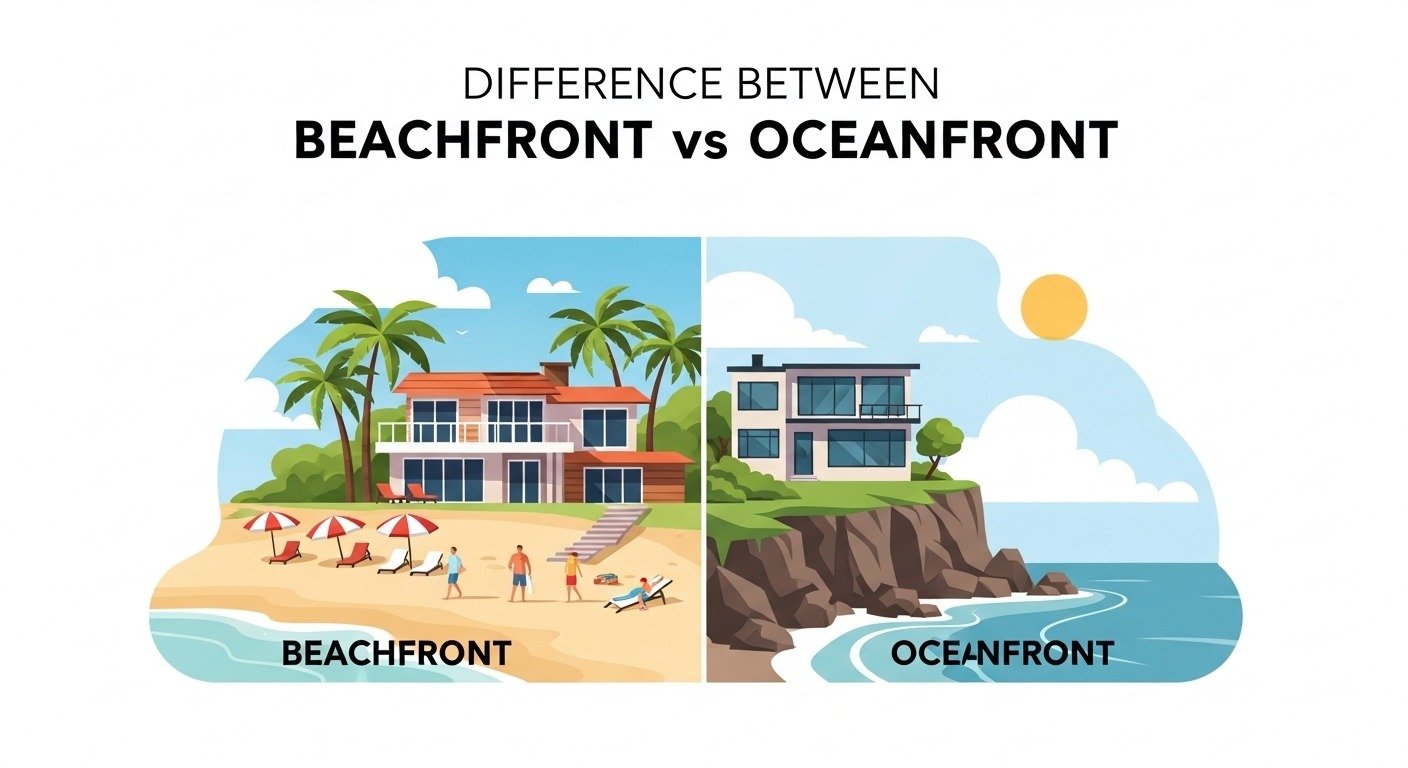
Beachfront usually means a property sits directly on the beach, allowing easy access to the sand and water. In contrast, oceanfront means the property faces the ocean but may not have direct beach access.
This simple confusion often happens in travel bookings. Many travelers don’t realize that the difference between beachfront and oceanfront can change the entire vacation experience.
Understanding the difference between beachfront and oceanfront helps travelers, buyers, and real estate experts make better decisions.
So before booking your next seaside stay, it’s helpful to clearly know the difference between beachfront and oceanfront and what each term truly offers.
Key Difference Between the Both
The main difference lies in access and location.
- Beachfront properties sit directly on the beach with immediate access to sand and water.
- Oceanfront properties face the ocean but may be separated by cliffs, roads, or other barriers.
Why Is Their Difference Necessary to Know for Learners and Experts?
Understanding these terms is important for travelers, property buyers, real estate agents, and tourism professionals.
For learners, it builds accurate vocabulary and communication skills. For experts in hospitality or property marketing, knowing the difference between beachfront and oceanfront prevents misunderstandings and ensures honest advertising.
Clear knowledge also protects consumers. When people know the exact meaning, they can choose properties that match their expectations and budget.
Pronunciation of Both
Beachfront
- US: /ˈbiːtʃ.frʌnt/
- UK: /ˈbiːtʃ.frʌnt/
Oceanfront
- US: /ˈoʊ.ʃən.frʌnt/
- UK: /ˈəʊ.ʃən.frʌnt/
Understanding their pronunciation and meaning prepares us to explore their deeper distinctions. Now, let’s look at the clear differences between beachfront and oceanfront in detail.
Difference Between the Keywords
1. Location
Beachfront: Located directly on the beach sand.
Examples:
- A hotel built directly beside the sand dunes.
- A beach house where you step outside and reach the sand.
Oceanfront: Faces the ocean but may be above cliffs or separated by land.
Examples:
- A resort on a cliff overlooking the ocean.
- A building across a coastal road with ocean views.
2. Direct Beach Access
Beachfront: Provides immediate access to the beach.
Examples:
- Guests walk straight from the resort to the beach.
- A private villa with its own beach entry.
Oceanfront: Access may require walking or driving.
Examples:
- A hotel overlooking the sea but requiring a path to reach the beach.
- A condominium with ocean views but no direct sand access.
3. View
Beachfront: Views include sand, water, and shoreline.
Examples:
- Balcony overlooking waves and sandy beach.
- Windows facing beach activities.
Oceanfront: Primarily offers views of the ocean itself.
Examples:
- A high-rise apartment facing the sea.
- A cliffside lodge overlooking the water.
4. Property Value
Beachfront: Usually more expensive because of direct access.
Examples:
- Luxury beachfront villas costing millions.
- Premium resort rooms on the sand.
Oceanfront: Often slightly less expensive.
Examples:
- Hotels with ocean views but not direct beach entry.
- Apartments overlooking the sea.
5. Privacy
Beachfront: May have less privacy due to beach visitors.
Examples:
- Public beaches near the property.
- Tourists walking along the shore.
Oceanfront: Sometimes more private due to elevation or barriers.
Examples:
- Cliffside homes with no public beach access.
- Elevated resorts away from crowds.
6. Environmental Exposure
Beachfront: Faces stronger sand, wind, and tidal exposure.
Examples:
- Sandstorms near the shoreline.
- Saltwater damage to buildings.
Oceanfront: Slightly protected if elevated.
Examples:
- Cliffside buildings protected from tides.
- Properties behind coastal vegetation.
7. Accessibility
Beachfront: Easier for activities like swimming and sunbathing.
Examples:
- Families walking to the beach with children.
- Surfing directly outside the property.
Oceanfront: Access might involve stairs or pathways.
Examples:
- Steps leading down a cliff to the beach.
- Walking through a park to reach the shore.
8. Tourism Appeal
Beachfront: Ideal for beach lovers.
Examples:
- Honeymoon resorts on the sand.
- Beach clubs and seaside restaurants.
Oceanfront: Attractive for scenic views.
Examples:
- Cliffside sunset hotels.
- Ocean-view restaurants.
9. Noise Level
Beachfront: More activity and beach noise.
Examples:
- Crowds playing volleyball.
- Music from beach bars.
Oceanfront: Often quieter depending on location.
Examples:
- Calm cliffside resorts.
- Secluded ocean-view homes.
10. Real Estate Marketing
Beachfront: Used to emphasize direct beach luxury.
Examples:
- “Private beachfront villa.”
- “Beachfront resort with exclusive access.”
Oceanfront: Focuses on views and scenery.
Examples:
- “Oceanfront balcony suite.”
- “Oceanfront luxury apartment.”
Nature and Behaviour of Both
Beachfront properties interact closely with the shoreline environment. They experience direct contact with sand, tides, and beach life.
Oceanfront properties mainly emphasize visual connection with the ocean rather than physical proximity to the beach.
Why People Are Confused About Their Use?
People often assume both terms mean the same seaside location. Marketing language in tourism and real estate sometimes uses them loosely. Because both involve ocean views, travelers may not notice the subtle difference in actual beach access.
Table Showing Difference and Similarity
| Aspect | Beachfront | Oceanfront | Similarity |
| Location | Directly on beach | Facing ocean | Both near ocean |
| Access | Immediate beach access | May require walking | Both allow ocean enjoyment |
| Views | Sand + water | Mainly water | Scenic coastal views |
| Price | Usually higher | Slightly lower | Premium coastal property |
| Tourism Appeal | Beach activities | Scenic relaxation | Popular vacation spots |
Which Is Better in What Situation?
Beachfront is better for travelers who want direct beach activities such as swimming, sunbathing, and beach sports. Families and adventure seekers often prefer this option because everything is easily accessible.
Oceanfront is ideal for people who want peaceful views and scenic beauty without the busy atmosphere of beaches. Writers, couples, and relaxation seekers may prefer the calm environment and dramatic views offered by oceanfront locations.
How the Keywords Are Used in Metaphors and Similes
- “Her happiness felt like a beachfront sunrise—bright and refreshing.”
- “His dreams stretched out like an oceanfront horizon.”
These metaphors symbolize freedom, peace, and beauty.
Connotative Meaning
Beachfront
- Positive: luxury vacation, relaxation
- Neutral: coastal property
- Negative: crowded tourist areas
Examples:
- “They bought a beachfront home for retirement.”
- “The beachfront became crowded during summer.”
Oceanfront
- Positive: breathtaking views
- Neutral: seaside location
- Negative: exposure to storms
Examples:
- “The oceanfront hotel offered a stunning sunset.”
- “The oceanfront area faced strong winds.”
Idioms or Proverbs Related to the Words
While no direct idioms exist, related sea expressions include:
- “A drop in the ocean” – something very small
Example: “Their donation was a drop in the ocean compared to the need.” - “Smooth sailing” – something easy
Example: “After booking the right hotel, the vacation was smooth sailing.”
Works in Literature
- The Old Man and the Sea — Novel, Ernest Hemingway, 1952
- The Sea, The Sea — Novel, Iris Murdoch, 1978
- To the Lighthouse — Novel, Virginia Woolf, 1927
Movies Related to the Ocean or Beach
- The Beach — 2000, USA/UK
- Jaws — 1975, USA
- Moana — 2016, USA
- Cast Away — 2000, USA
Frequently Asked Questions
1. Are beachfront and oceanfront the same?
No. Beachfront means direct beach access, while oceanfront mainly means facing the ocean.
2. Is beachfront always more expensive?
Usually yes, because it provides direct access to the beach.
3. Can an oceanfront property have beach access?
Sometimes, but it may require walking or using a pathway.
4. Which is better for vacations?
It depends on preference beach activities vs scenic views.
5. Why do hotels use these terms in marketing?
They help describe the property’s location and attract specific travelers.
How Both Are Useful for Surroundings
Both beachfront and oceanfront locations contribute to tourism, economic growth, and environmental appreciation. They encourage people to connect with nature, support coastal businesses, and promote awareness about protecting marine environments.
Final Words for Both
Beachfront and oceanfront properties both celebrate the beauty of the sea. The difference lies in direct access versus scenic view, but both offer unforgettable coastal experiences.
Conclusion:
Many travelers overlook the subtle yet important difference between beachfront and oceanfront. While both promise beautiful ocean surroundings, they deliver very different experiences.
Beachfront properties provide direct contact with the sand and sea. Guests can step outside and instantly enjoy beach activities. On the other hand, oceanfront locations focus more on breathtaking views of the water, sometimes from cliffs or elevated locations.
Knowing this distinction helps travelers avoid disappointment and choose wisely. It also helps professionals in tourism and real estate communicate clearly and honestly.
In the end, neither option is universally better. Beachfront offers action and access, while oceanfront offers peace and scenery. The best choice depends on personal preferences and travel goals.
By understanding the difference between beachfront and oceanfront, you can plan smarter vacations, make better property decisions, and fully enjoy the beauty of coastal living.

I am Steven Pinker is a Canadian-American cognitive psychologist, linguist, and popular science author known for his work on language, mind, and human nature.He is the author of influential books like The Language Instinct and The Sense of Style, where he explains grammar and usage with scientific clarity.At wordrar.com, his ideas continue to inspire readers who want to understand grammar, comparison, and clear communication more deeply.