Imagine a child receiving a birthday gift. She smiles warmly, hugs her parents, and says “thank you.” This moment shows Thankfulness – a simple acknowledgment of kindness.
Yet, when she grows older and reflects on the love behind that gift, she feels a deep sense of gratitude that shapes her behavior.
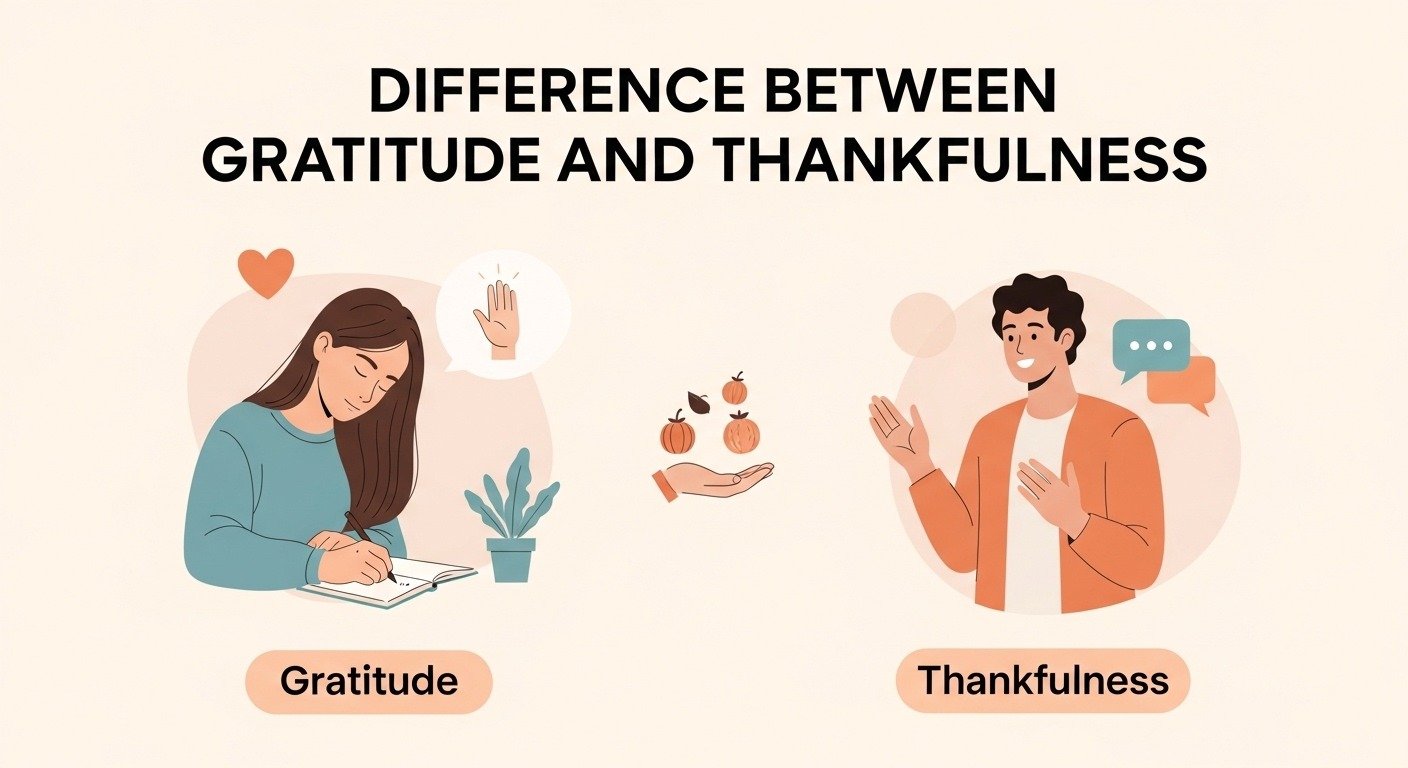
Gratitude and Thankfulness are often used interchangeably, but they carry distinct meanings. Thankfulness is a momentary feeling of appreciation, while gratitude is a sustained emotional awareness of value in life.
In real-world interactions, knowing the difference between gratitude and Thankfulness can improve relationships and mental well-being.
Experts and learners alike can benefit by recognizing how these emotions influence behavior.
Both gratitude and Thankfulness are positive human responses, yet they operate differently in social and psychological contexts.
Understanding their nuance helps in daily communication, leadership, and personal growth.
Let’s explore the key differences, importance, and applications of Gratitude and Thankfulness to fully grasp their significance.
Key Difference Between the Both
The main difference lies in depth and duration: thankfulness is often situational, while gratitude is continuous and reflective. Gratitude can inspire actions, whereas thankfulness often remains a verbal or immediate acknowledgment.
Why Knowing Their Difference Is Important
Understanding the difference is vital for personal growth and social harmony. Gratitude encourages empathy, generosity, and long-term mental health. Thankfulness strengthens immediate social bonds and polite behavior. Experts in psychology, education, and leadership benefit from distinguishing both for effective communication.
Difference Between Gratitude and Thankfulness
10 Points of Difference
- Depth of Emotion
- Gratitude: Deep appreciation for long-term value.
- Example 1: Feeling grateful for a mentor’s lifelong guidance.
- Example 2: Grateful for support during illness.
- Thankfulness: Immediate acknowledgment of kindness.
- Example 1: Saying “thanks” for a coffee.
- Example 2: Thanking a colleague for a document.
- Gratitude: Deep appreciation for long-term value.
- Duration
- Gratitude: Sustained over time.
- Thankfulness: Momentary, situation-specific.
- Expression
- Gratitude: May involve action or reflection.
- Thankfulness: Usually verbal or gesture-based.
- Emotional Impact
- Gratitude: Enhances overall well-being.
- Thankfulness: Provides short-term positivity.
- Cognitive Awareness
- Gratitude: Requires thoughtfulness and awareness.
- Thankfulness: Often instinctive.
- Behavioral Influence
- Gratitude: Inspires altruism and generosity.
- Thankfulness: Encourages politeness.
- Social Relevance
- Gratitude: Builds deep, meaningful connections.
- Thankfulness: Maintains friendly interactions.
- Psychological Benefit
- Gratitude: Linked to happiness and resilience.
- Thankfulness: Linked to courtesy and contentment.
- Cultural Perception
- Gratitude: Often spiritual or philosophical.
- Thankfulness: Common in daily etiquette.
- Scope of Usage
- Gratitude: Broader and reflective.
- Thankfulness: Narrower and immediate.
Nature and Behavior
Gratitude:
- Reflective, consistent, life-encompassing.
- Promotes empathy, self-awareness, and generosity.
Thankfulness:
- Immediate, polite, situational.
- Encourages positive social interactions and acknowledgment.
Why People Are Confused
Both express appreciation, but depth, duration, and expression differ. People mistake thankfulness for gratitude, missing the reflective element that shapes long-term behavior.
Table: Difference and Similarity
| Feature | Gratitude | Thankfulness | Similarity |
| Depth | Deep, reflective | Shallow, immediate | Both positive emotions |
| Duration | Long-lasting | Momentary | Both show appreciation |
| Expression | Actions, reflection | Words, gestures | Both improve social bonding |
| Emotional Impact | Life-enhancing | Short-term positivity | Both affect mood positively |
| Scope | Broad, philosophical | Narrow, situational | Both used in everyday life |
Which Is Better in What Situation?
Gratitude is ideal in situations requiring reflection, such as personal growth, therapy, or mentoring. Thankfulness fits casual interactions, like thanking someone for a favor or gift. Both complement each other, balancing deep reflection and social etiquette effectively.
Metaphors and Similes
- Gratitude: “Gratitude is the soil where happiness grows.”
- Thankfulness: “Thankfulness is like a smile—brief but bright.”
Connotative Meaning
- Gratitude: Positive, reflective, empowering.
- Thankfulness: Positive, polite, immediate.
- Example: Gratitude transforms life perspective; thankfulness maintains everyday courtesy.
Idioms or Proverbs
- “Count your blessings” – emphasizes gratitude.
- “Thanks a million” – shows thankfulness.
- Example: “He counted his blessings and felt gratitude,” vs. “She said thanks a million for the help.”
Works in Literature
- Gratitude – Poetry, Oliver Sacks, 2015
- Thankfulness – Essay, William Hazlitt, 1826
Movies
- Gratitude – 2005, USA
- Thankfulness – 2019, Canada
FAQs
- Are gratitude and thankfulness the same?
No, gratitude is reflective; thankfulness is situational. - Which is more powerful emotionally?
Gratitude has a deeper emotional impact. - Can thankfulness lead to gratitude?
Yes, repeated thankfulness can evolve into gratitude. - Is gratitude always positive?
Usually positive, though can evoke sadness if tied to loss. - How do they improve society?
Gratitude fosters empathy; thankfulness strengthens social bonds.
How Both Are Useful for Surroundings
- Gratitude motivates helpfulness and community support.
- Thankfulness ensures polite and harmonious interactions.
Together, they nurture a positive and respectful environment.
Final Words
Both gratitude and thankfulness are essential human traits. Understanding their nuances enhances relationships, improves mental health, and fosters a culture of respect and generosity.
Conclusion:
Gratitude and thankfulness are interconnected yet distinct. Gratitude reflects deep appreciation for life and its blessings, inspiring long-term behavior and inner peace.
Thankfulness is immediate acknowledgment, strengthening everyday interactions. Both are vital for personal growth, social harmony, and emotional well-being.
By distinguishing them, individuals can cultivate mindfulness, empathy, and positivity, creating stronger bonds with family, friends, and society.
In essence, practicing gratitude and thankfulness together enriches life, making it more meaningful and socially fulfilling. Understanding, expressing, and embracing both emotions leads to a balanced and harmonious life.

I am William Strunk Jr an American professor of English and the author of the classic style guide the Elements of Style. He emphasized clarity, brevity, and proper grammar in writing, influencing generations of writers. Learn more about his work and writing tips at wordrar.com.