A little boy falls off his bicycle, and within minutes a blue-purple mark appears on his knee. His mother calmly says, “It’s just a bruise.” But when his grandfather once had a painful swelling after bumping into a table, the doctor called it a hematoma. Same cause injury. Different result. This is where the difference between hematoma and bruise becomes important.
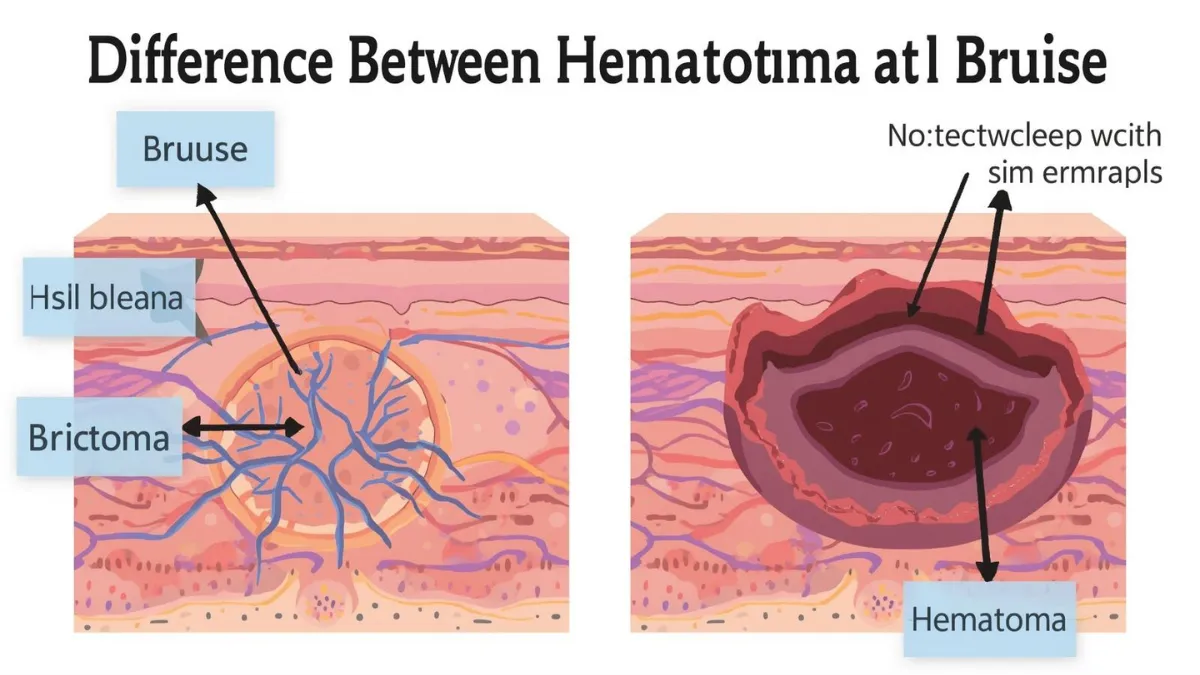
In simple terms, a bruise is a mild injury where small blood vessels break under the skin. A hematoma, however, is a collection of blood that pools outside blood vessels, often forming a lump.
Many people use the two words interchangeably.
But medically, they are not the same.
Understanding the difference between hematoma and bruise helps you know when to relax — and when to seek medical care. For students, professionals, and even parents, this difference between hematoma and bruise is practical knowledge that can prevent complications.
Let’s explore the difference between hematoma and bruise in detail so the confusion ends here.
Key Difference Between the Both
The main difference between hematoma and bruise lies in severity and blood collection.
- A bruise (contusion) happens when small capillaries break, causing discoloration under the skin.
- A hematoma occurs when larger blood vessels rupture, allowing blood to pool and sometimes form a raised swelling.
A bruise is usually flat and changes color over time.
A hematoma is often swollen, painful, and may require medical attention.
Why Is Their Difference Necessary to Know for Learners and Experts?
Understanding the difference between hematoma and bruise is essential in society because:
- Medical students must correctly diagnose injury severity.
- Nurses and doctors decide treatment plans based on this distinction.
- Athletes and trainers need to know when swelling is serious.
- Parents and caregivers can avoid unnecessary panic.
Knowing this difference promotes early diagnosis, proper treatment, and public health awareness. It can even prevent dangerous complications such as internal bleeding.
Pronunciation (US & UK)
- Hematoma
- US: /ˌhiː.məˈtoʊ.mə/
- UK: /ˌhiː.məˈtəʊ.mə/
- Bruise
- US: /bruːz/
- UK: /bruːz/
Now that we understand the basics, let’s dive deeper into their structured comparison.
Difference Between Hematoma and Bruise
1. Definition
Bruise: Minor injury causing skin discoloration.
Examples:
- A child hits a wall and gets a purple mark.
- A football player develops a small blue patch.
Hematoma: Collection of clotted blood outside vessels.
Examples:
- A hard swelling after a car accident.
- A lump after a blood test gone wrong.
2. Severity
Bruise: Usually mild.
Examples:
- Minor fall at home.
- Light bump on furniture.
Hematoma: Can be moderate to severe.
Examples:
- Head injury causing internal bleeding.
- Deep muscle injury after trauma.
3. Appearance
Bruise: Flat discoloration.
Examples:
- Yellowish mark after healing.
- Blue patch on arm.
Hematoma: Raised swelling.
Examples:
- Noticeable lump under skin.
- Firm swollen area on thigh.
4. Pain Level
Bruise: Mild tenderness.
Examples:
- Slight pain when touched.
- Discomfort while moving.
Hematoma: Often painful.
Examples:
- Throbbing sensation.
- Severe pain during movement.
5. Healing Time
Bruise: Heals in 1–2 weeks.
Examples:
- Small bruise fades in days.
- Color changes gradually.
Hematoma: May take weeks or require drainage.
Examples:
- Large swelling lasting months.
- Surgical removal needed.
6. Blood Vessel Involved
Bruise: Small capillaries.
Examples:
- Skin-level injury.
- Surface damage.
Hematoma: Larger vessels.
Examples:
- Muscle tear bleeding.
- Deep tissue rupture.
7. Treatment
Bruise: Ice and rest.
Examples:
- Cold compress.
- Elevation of limb.
Hematoma: May need medical care.
Examples:
- Drainage procedure.
- Hospital observation.
8. Risk Level
Bruise: Low risk.
Examples:
- Cosmetic concern only.
- No internal damage.
Hematoma: Possible complications.
Examples:
- Brain hematoma risk.
- Infection possibility.
9. Location
Bruise: Usually skin surface.
Examples:
- Arm bruise.
- Leg bruise.
Hematoma: Can occur internally.
Examples:
- Brain hematoma.
- Abdominal hematoma.
10. Medical Attention
Bruise: Rarely needed.
Examples:
- Self-care at home.
- Heals naturally.
Hematoma: Often evaluated.
Examples:
- Emergency visit.
- Diagnostic imaging required.
Nature and Behaviour
A bruise behaves gently. It changes color from red to blue, then green and yellow as it heals.
A hematoma behaves aggressively. It may enlarge, harden, or cause pressure in tissues.
Why People Are Confused About Their Use?
People confuse them because both involve bleeding under the skin. Also, some hematomas appear like large bruises. Media and casual language further mix the terms.
Table: Difference and Similarity
| Feature | Bruise | Hematoma | Similarity |
| Definition | Minor capillary damage | Blood pooling outside vessels | Both caused by injury |
| Appearance | Flat | Raised | Discoloration possible |
| Severity | Mild | Moderate to severe | Involve broken vessels |
| Treatment | Home care | May need medical help | Ice useful in both |
| Healing | Quick | Slower | Body reabsorbs blood |
Which Is Better in What Situation?
A bruise is better in minor injury situations because it usually heals naturally. It does not require hospital visits and rarely causes complications. For athletes, children, and daily accidents, bruises are manageable and temporary.
A hematoma is not “better,” but in some cases, its formation can signal serious internal injury early. For example, after head trauma, detecting a hematoma quickly can save a life. In that sense, it acts as a warning sign that demands medical care.
Use in Metaphors and Similes
- “Her heart was bruised by betrayal.”
- “The scandal left a hematoma on the company’s reputation.”
Connotative Meaning
Bruise
- Negative: “His words left a bruise on her confidence.”
- Neutral: “She has a small bruise from training.”
Hematoma
- Strongly negative: “The crisis became a hematoma in the economy.”
- Clinical/neutral in medical context.
Idioms / Proverbs
- “Bruised ego” – His failure gave him a bruised ego.
- “Adding insult to injury” – Teasing him about his bruise was adding insult to injury.
(No common idioms directly use hematoma, as it is medical.)
Works in Literature
- On Being Ill (Essay, Virginia Woolf, 1926) – discusses bodily injury including bruising.
- The Body (Non-fiction, Bill Bryson, 2019) – mentions hematoma in medical explanations.
Movies
- Concussion (2015, USA) – discusses brain hematoma injuries.
- Million Dollar Baby (2004, USA) – shows severe sports injuries including bruising.
Five Frequently Asked Questions
1. Is a hematoma more serious than a bruise?
Yes, generally it is deeper and may require treatment.
2. Can a bruise turn into a hematoma?
In some cases, severe bruising may develop into a hematoma.
3. Do both change color?
Bruises change color clearly; hematomas may not.
4. Should I see a doctor for a bruise?
Only if it is unusually large or painful.
5. Are internal hematomas dangerous?
Yes, especially brain or abdominal hematomas.
How Both Are Useful for Surroundings
Both conditions act as biological warning systems. They signal tissue damage and encourage rest and protection, helping the body recover.
Final Words for the Both
A bruise whispers.
A hematoma shouts.
Both protect us by showing visible signs of injury.
Conclusion
A fall, a bump, or a collision — injuries are part of life. But understanding the difference between hematoma and bruise can make a major difference in response and recovery. A bruise is mild, flat, and temporary, while a hematoma is deeper, swollen, and potentially serious.
Knowing this distinction helps in making smart health decisions.
It prevents panic over small injuries.
It also prevents neglect of serious ones.
In short, the difference between hematoma and bruise is not just medical terminology — it is practical knowledge for everyday safety and professional awareness.
Meta Description:
Discover the difference between hematoma and bruise, including causes, symptoms, treatment, severity, and medical importance in this easy comparison guide.
Introduction
A little boy falls off his bicycle, and within minutes a blue-purple mark appears on his knee. His mother calmly says, “It’s just a bruise.” But when his grandfather once had a painful swelling after bumping into a table, the doctor called it a hematoma. Same cause — injury. Different result. This is where the difference between hematoma and bruise becomes important.
In simple terms, a bruise is a mild injury where small blood vessels break under the skin. A hematoma, however, is a collection of blood that pools outside blood vessels, often forming a lump.
Many people use the two words interchangeably.
But medically, they are not the same.
Understanding the difference between hematoma and bruise helps you know when to relax — and when to seek medical care. For students, professionals, and even parents, this difference between hematoma and bruise is practical knowledge that can prevent complications.
Let’s explore the difference between hematoma and bruise in detail so the confusion ends here.
Key Difference Between the Both
The main difference between hematoma and bruise lies in severity and blood collection.
- A bruise (contusion) happens when small capillaries break, causing discoloration under the skin.
- A hematoma occurs when larger blood vessels rupture, allowing blood to pool and sometimes form a raised swelling.
A bruise is usually flat and changes color over time.
A hematoma is often swollen, painful, and may require medical attention.
Why Is Their Difference Necessary to Know for Learners and Experts?
Understanding the difference between hematoma and bruise is essential in society because:
- Medical students must correctly diagnose injury severity.
- Nurses and doctors decide treatment plans based on this distinction.
- Athletes and trainers need to know when swelling is serious.
- Parents and caregivers can avoid unnecessary panic.
Knowing this difference promotes early diagnosis, proper treatment, and public health awareness. It can even prevent dangerous complications such as internal bleeding.
Pronunciation (US & UK)
- Hematoma
- US: /ˌhiː.məˈtoʊ.mə/
- UK: /ˌhiː.məˈtəʊ.mə/
- Bruise
- US: /bruːz/
- UK: /bruːz/
Now that we understand the basics, let’s dive deeper into their structured comparison.
Difference Between Hematoma and Bruise
1. Definition
Bruise: Minor injury causing skin discoloration.
Examples:
- A child hits a wall and gets a purple mark.
- A football player develops a small blue patch.
Hematoma: Collection of clotted blood outside vessels.
Examples:
- A hard swelling after a car accident.
- A lump after a blood test gone wrong.
2. Severity
Bruise: Usually mild.
Examples:
- Minor fall at home.
- Light bump on furniture.
Hematoma: Can be moderate to severe.
Examples:
- Head injury causing internal bleeding.
- Deep muscle injury after trauma.
3. Appearance
Bruise: Flat discoloration.
Examples:
- Yellowish mark after healing.
- Blue patch on arm.
Hematoma: Raised swelling.
Examples:
- Noticeable lump under skin.
- Firm swollen area on thigh.
4. Pain Level
Bruise: Mild tenderness.
Examples:
- Slight pain when touched.
- Discomfort while moving.
Hematoma: Often painful.
Examples:
- Throbbing sensation.
- Severe pain during movement.
5. Healing Time
Bruise: Heals in 1–2 weeks.
Examples:
- Small bruise fades in days.
- Color changes gradually.
Hematoma: May take weeks or require drainage.
Examples:
- Large swelling lasting months.
- Surgical removal needed.
6. Blood Vessel Involved
Bruise: Small capillaries.
Examples:
- Skin-level injury.
- Surface damage.
Hematoma: Larger vessels.
Examples:
- Muscle tear bleeding.
- Deep tissue rupture.
7. Treatment
Bruise: Ice and rest.
Examples:
- Cold compress.
- Elevation of limb.
Hematoma: May need medical care.
Examples:
- Drainage procedure.
- Hospital observation.
8. Risk Level
Bruise: Low risk.
Examples:
- Cosmetic concern only.
- No internal damage.
Hematoma: Possible complications.
Examples:
- Brain hematoma risk.
- Infection possibility.
9. Location
Bruise: Usually skin surface.
Examples:
- Arm bruise.
- Leg bruise.
Hematoma: Can occur internally.
Examples:
- Brain hematoma.
- Abdominal hematoma.
10. Medical Attention
Bruise: Rarely needed.
Examples:
- Self-care at home.
- Heals naturally.
Hematoma: Often evaluated.
Examples:
- Emergency visit.
- Diagnostic imaging required.
Nature and Behaviour
A bruise behaves gently. It changes color from red to blue, then green and yellow as it heals.
A hematoma behaves aggressively. It may enlarge, harden, or cause pressure in tissues.
Why People Are Confused About Their Use?
People confuse them because both involve bleeding under the skin. Also, some hematomas appear like large bruises. Media and casual language further mix the terms.
Table: Difference and Similarity
| Feature | Bruise | Hematoma | Similarity |
| Definition | Minor capillary damage | Blood pooling outside vessels | Both caused by injury |
| Appearance | Flat | Raised | Discoloration possible |
| Severity | Mild | Moderate to severe | Involve broken vessels |
| Treatment | Home care | May need medical help | Ice useful in both |
| Healing | Quick | Slower | Body reabsorbs blood |
Which Is Better in What Situation?
A bruise is better in minor injury situations because it usually heals naturally. It does not require hospital visits and rarely causes complications. For athletes, children, and daily accidents, bruises are manageable and temporary.
A hematoma is not “better,” but in some cases, its formation can signal serious internal injury early. For example, after head trauma, detecting a hematoma quickly can save a life. In that sense, it acts as a warning sign that demands medical care.
Use in Metaphors and Similes
- “Her heart was bruised by betrayal.”
- “The scandal left a hematoma on the company’s reputation.”
Connotative Meaning
Bruise
- Negative: “His words left a bruise on her confidence.”
- Neutral: “She has a small bruise from training.”
Hematoma
- Strongly negative: “The crisis became a hematoma in the economy.”
- Clinical/neutral in medical context.
Idioms / Proverbs
- “Bruised ego” – His failure gave him a bruised ego.
- “Adding insult to injury” – Teasing him about his bruise was adding insult to injury.
(No common idioms directly use hematoma, as it is medical.)
Works in Literature
- On Being Ill (Essay, Virginia Woolf, 1926) – discusses bodily injury including bruising.
- The Body (Non-fiction, Bill Bryson, 2019) – mentions hematoma in medical explanations.
Movies
- Concussion (2015, USA) – discusses brain hematoma injuries.
- Million Dollar Baby (2004, USA) – shows severe sports injuries including bruising.
Five Frequently Asked Questions
1. Is a hematoma more serious than a bruise?
Yes, generally it is deeper and may require treatment.
2. Can a bruise turn into a hematoma?
In some cases, severe bruising may develop into a hematoma.
3. Do both change color?
Bruises change color clearly; hematomas may not.
4. Should I see a doctor for a bruise?
Only if it is unusually large or painful.
5. Are internal hematomas dangerous?
Yes, especially brain or abdominal hematomas.
How Both Are Useful for Surroundings
Both conditions act as biological warning systems. They signal tissue damage and encourage rest and protection, helping the body recover.
Final Words for the Both
A bruise whispers.
A hematoma shouts.
Both protect us by showing visible signs of injury.
Conclusion
A fall, a bump, or a collision — injuries are part of life. But understanding the difference between hematoma and bruise can make a major difference in response and recovery. A bruise is mild, flat, and temporary, while a hematoma is deeper, swollen, and potentially serious.
Knowing this distinction helps in making smart health decisions.
It prevents panic over small injuries.
It also prevents neglect of serious ones.
In short, the difference between hematoma and bruise is not just medical terminology — it is practical knowledge for everyday safety and professional awareness.

I am Lynne truss , journalist, and broadcaster best known for her bestselling grammar book Eats, Shoots & Leaves, which highlights the importance of punctuation in clear writing. Her engaging and witty style has made grammar accessible and entertaining for millions of readers worldwide.at wordrar.com, we admire her work for inspiring readers to appreciate the power of precise language and proper grammar.