At the gym, Ali proudly flexed his arm and said, “Look at my biceps!” His trainer smiled and replied, “Great but don’t forget your triceps.”
That simple moment explains the difference between biceps and triceps in real life.
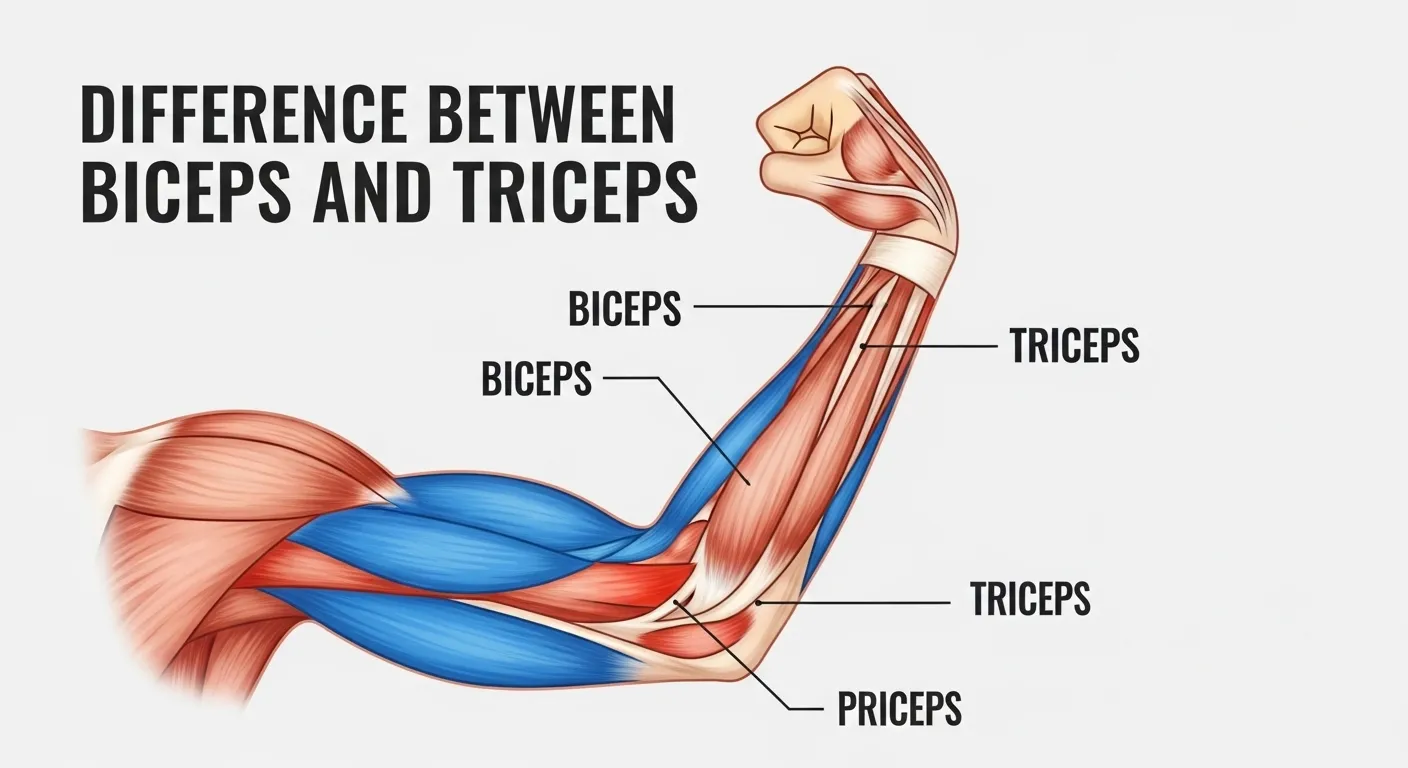
The biceps are the muscles at the front of your upper arm.
The triceps are located at the back of your upper arm.
Understanding the difference between biceps and triceps helps athletes, students, and fitness lovers train correctly.
It prevents imbalance and improves strength.
In daily movements like lifting bags or pushing doors, both muscles work together.
That’s why learning the difference between biceps and triceps is more important than most people think.
In this article, we will clearly explain the difference between biceps and triceps using simple language and practical examples.
Key Difference Between the Both
The main difference is their location and function.
- Biceps bend the elbow and help lift objects.
- Triceps straighten the elbow and help push objects away.
They work as opposite partners in arm movement.
Why Is Their Difference Necessary to Know for Learners and Experts?
Knowing the difference between biceps and triceps is important in fitness, sports science, and medical studies.
For learners, it builds correct anatomical knowledge.
For athletes, it improves balanced muscle training.
For physiotherapists, it helps in injury recovery.
For society, it promotes healthy exercise habits and prevents muscular disorders.
Balanced muscles mean better posture, stronger arms, and fewer injuries.
Pronunciation (US & UK)
- Biceps
- US: /ˈbaɪ.seps/
- UK: /ˈbaɪ.seps/
- Triceps
- US: /ˈtraɪ.seps/
- UK: /ˈtraɪ.seps/
Before we move into detailed comparisons, let’s explore the core difference between biceps and triceps step by step.
Difference Between Biceps and Triceps
1. Location
- Biceps are at the front of the upper arm.
- Example 1: You see them when you flex your arm.
- Example 2: They are visible during arm curls.
- Triceps are at the back of the upper arm.
- Example 1: They show when you extend your arm.
- Example 2: They activate during push-ups.
2. Number of Heads
- Biceps have two heads.
- Example 1: Long head.
- Example 2: Short head.
- Triceps have three heads.
- Example 1: Long head.
- Example 2: Lateral and medial heads.
3. Main Function
- Biceps bend the elbow.
- Example 1: Lifting groceries.
- Example 2: Doing bicep curls.
- Triceps straighten the elbow.
- Example 1: Throwing a ball.
- Example 2: Doing push-ups.
4. Role in Sports
- Biceps help in pulling movements.
- Example 1: Rowing.
- Example 2: Climbing.
- Triceps help in pushing movements.
- Example 1: Boxing punches.
- Example 2: Basketball shooting.
5. Strength Contribution
- Biceps contribute less overall arm mass.
- Example 1: Smaller muscle size.
- Example 2: Focused in flexion.
- Triceps make up most arm mass.
- Example 1: Bigger muscle group.
- Example 2: Adds arm thickness.
6. Exercises
- Biceps exercises involve curls.
- Example 1: Dumbbell curls.
- Example 2: Chin-ups.
- Triceps exercises involve extensions.
- Example 1: Tricep dips.
- Example 2: Skull crushers.
7. Injury Type
- Biceps injuries often occur from over-pulling.
- Example 1: Heavy lifting strain.
- Example 2: Tendon tear.
- Triceps injuries occur from over-pushing.
- Example 1: Bench press strain.
- Example 2: Elbow extension injury.
8. Daily Activity Use
- Biceps help lift objects toward the body.
- Example 1: Carrying a child.
- Example 2: Holding a phone.
- Triceps push objects away.
- Example 1: Opening heavy doors.
- Example 2: Standing from a chair.
9. Muscle Shape
- Biceps appear rounded when flexed.
- Example 1: Bodybuilder pose.
- Example 2: Mirror flex moment.
- Triceps appear horseshoe-shaped.
- Example 1: Side arm pose.
- Example 2: Back arm definition.
10. Muscle Balance
- Weak biceps limit pulling strength.
- Example 1: Weak grip pull-ups.
- Example 2: Reduced lifting power.
- Weak triceps limit pushing strength.
- Example 1: Weak push-ups.
- Example 2: Poor bench press.
Nature and Behaviour
Biceps are flexor muscles. They contract to bend the elbow. They respond quickly in pulling actions.
Triceps are extensor muscles. They contract to straighten the arm. They provide stability and controlled pushing power.
Why People Are Confused About Their Use?
People see biceps more often because they are visible when flexed.
The names sound similar.
Both are in the same arm area.
Many beginners train only biceps and ignore triceps.
Table Showing Difference and Similarity
| Feature | Biceps | Triceps | Similarity |
| Location | Front arm | Back arm | Upper arm muscles |
| Heads | Two | Three | Named by number of heads |
| Function | Bending | Straightening | Control elbow |
| Size | Smaller | Larger | Work together |
| Exercise Type | Pull | Push | Strength training |
Which Is Better in What Situation?
Biceps are better in pulling situations. When lifting groceries, pulling a rope, or performing chin-ups, biceps play the leading role. They provide controlled bending strength and help in precise arm movements.
Triceps are better in pushing situations. When doing push-ups, pushing furniture, or throwing a ball, triceps generate strong extension power. They are crucial in sports requiring explosive arm extension.
Metaphors and Similes
- “His biceps were like steel cables.”
- “Her triceps worked like powerful springs.”
- “Strong as a bodybuilder’s biceps.”
- “Sharp as a boxer’s triceps punch.”
Connotative Meaning
Biceps
- Positive: Strength, confidence
- Example: “He flexed his biceps proudly.”
- Neutral: Physical muscle
- Rare Negative: Showing off
Triceps
- Positive: Power, support
- Example: “Her triceps showed athletic dedication.”
- Neutral: Anatomical muscle
- Negative: Rarely used negatively
Idioms or Proverbs
Though direct idioms are rare, related strength expressions include:
- “Flex your muscles” – Show strength.
- Example: The team flexed its muscles in the final match.
- “Strong arm tactics” – Use force.
- Example: The manager used strong-arm tactics.
Works in Literature
Direct titles using these muscles are rare, but they appear in fitness and anatomy books:
- Gray’s Anatomy – Medical Textbook, Henry Gray, 1858
- Strength Training Anatomy – Fitness Guide, Frederic Delavier, 1998
Movies Related to Muscular Strength
- Pumping Iron – 1977, USA
- Rocky – 1976, USA
Frequently Asked Questions
1. What is the main difference between biceps and triceps?
Biceps bend the arm, triceps straighten it.
2. Which muscle is bigger?
Triceps are generally bigger.
3. Can you train one without the other?
Yes, but it causes imbalance.
4. Which is more important?
Both are equally important.
5. Why do biceps look bigger when flexed?
Because they contract visibly in front of the arm.
How Both Are Useful for Surroundings
Both muscles help in daily tasks like lifting, pushing, sports, and physical labor.
They allow humans to perform manual work efficiently and safely.
Final Words for Both
Biceps represent visible strength.
Triceps represent hidden power.
Together, they create balanced movement and stability.
Conclusion
The difference between biceps and triceps lies mainly in their position, structure, and function.
One bends. One straightens.
Yet both are equally essential.
They work as a perfect muscular partnership.
Understanding the difference between biceps and triceps improves workouts, prevents injuries, and strengthens anatomical knowledge.
Strong arms are not about one muscle.
They are about balance, coordination, and awareness.
When trained together, biceps and triceps build not just power but complete functional strength.
I am Lynne truss , journalist, and broadcaster best known for her bestselling grammar book Eats, Shoots & Leaves, which highlights the importance of punctuation in clear writing. Her engaging and witty style has made grammar accessible and entertaining for millions of readers worldwide.at wordrar.com, we admire her work for inspiring readers to appreciate the power of precise language and proper grammar.