In a busy kitchen, a chef prepares multiple dishes at once.
Each dish feels independent, yet they share the same space and tools.
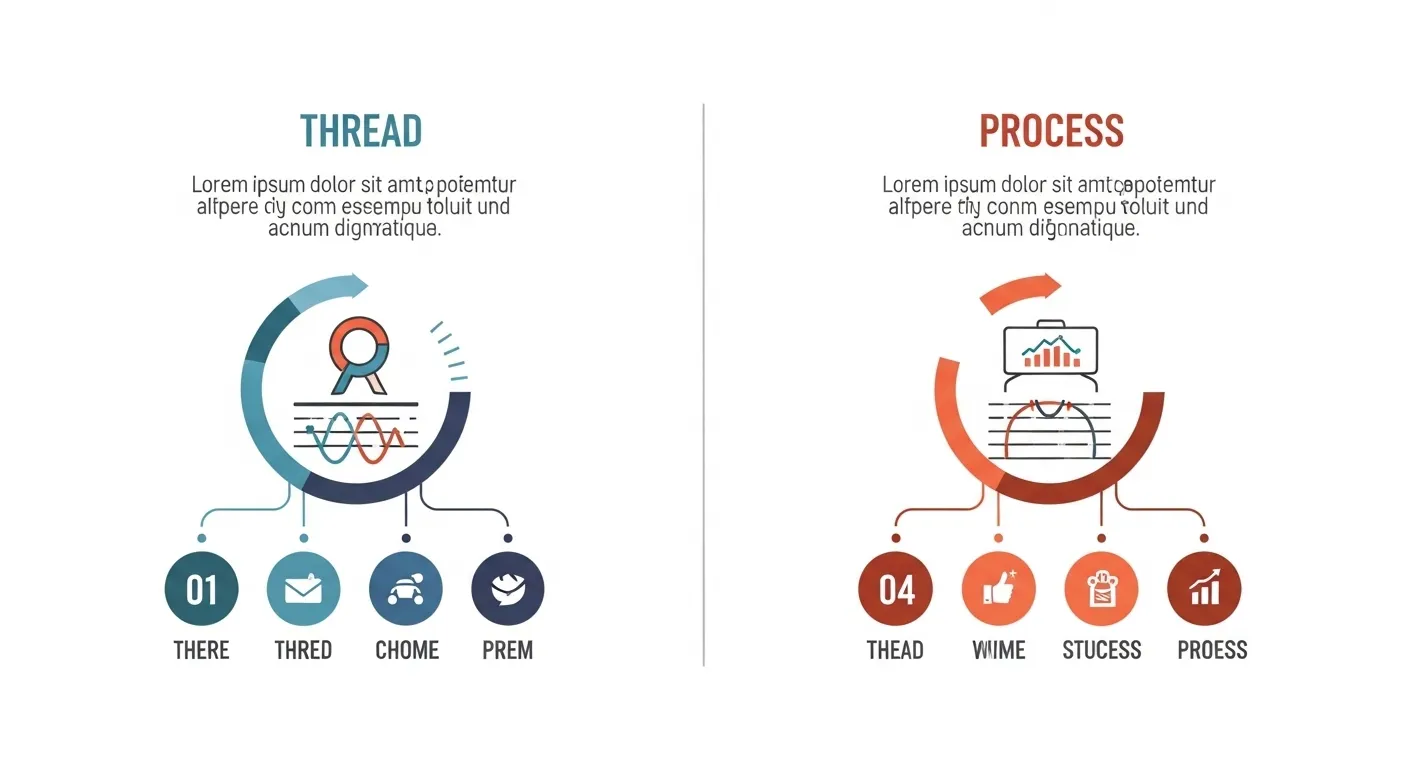
This is similar to the difference between thread and process in computing.
A process is like a complete kitchen setup.
It has its own ingredients, tools, and environment.
It works independently from others.
A thread, however, is like a helper inside that kitchen.
It shares tools and space but focuses on a specific task.
This highlights the difference between thread and process clearly.
When systems run smoothly, both processes and threads cooperate.
Understanding the difference between thread and process helps in building faster programs.
It also improves system performance and efficiency.
In simple terms, processes are independent units, while threads are smaller parts within them.
Grasping this difference between thread and process is essential for developers and learners alike.
Key Difference Between the Both
The main difference between thread and process lies in independence and resource sharing.
A process operates independently with its own memory, while a thread shares memory within a process.
Why Is Their Difference Necessary to Know?
Understanding the difference between thread and process is crucial for both beginners and experts.
- It helps developers design efficient and faster applications
- It improves system performance and multitasking
- It reduces resource wastage
- It allows better handling of parallel tasks in modern computing
In today’s digital world, from mobile apps to large servers, this knowledge plays a vital role in building reliable systems.
Pronunciation
- Thread
- US: /θrɛd/
- UK: /θrɛd/
- Process
- US: /ˈprɑː.ses/
- UK: /ˈprəʊ.ses/
Hook to Main Content
Now that you understand the basics, let’s dive deeper into the detailed difference between thread and process and how they behave in real-world computing.
Difference Between Thread and Process
1. Definition
- Process: Independent program in execution
- Example 1: Running a web browser
- Example 2: Opening a music player
- Thread: Smallest unit within a process
- Example 1: Loading images in a browser
- Example 2: Playing audio while browsing
2. Memory Usage
- Process: Has its own memory space
- Example 1: Two apps don’t share data directly
- Example 2: Crashing one app doesn’t affect another
- Thread: Shares memory with other threads
- Example 1: Threads access same variables
- Example 2: Faster data sharing
3. Communication
- Process: Communication is complex (IPC)
- Example 1: Pipes
- Example 2: Sockets
- Thread: Communication is easy
- Example 1: Shared variables
- Example 2: Common memory access
4. Creation Time
- Process: Takes more time to create
- Example 1: Launching software
- Example 2: Starting a new app
- Thread: Faster to create
- Example 1: Spawning worker threads
- Example 2: Background tasks
5. Switching Speed
- Process: Slower context switching
- Example 1: OS switching between apps
- Example 2: Heavy operations
- Thread: Faster switching
- Example 1: Within same app
- Example 2: Smooth multitasking
6. Dependency
- Process: Independent
- Example 1: Closing one app doesn’t close others
- Example 2: Separate execution
- Thread: Dependent on process
- Example 1: Process crash stops threads
- Example 2: Shared lifecycle
7. Resource Allocation
- Process: Requires more resources
- Example 1: Memory allocation
- Example 2: System overhead
- Thread: Uses fewer resources
- Example 1: Lightweight
- Example 2: Efficient execution
8. Isolation
- Process: Strong isolation
- Example 1: Security boundaries
- Example 2: Fault isolation
- Thread: Weak isolation
- Example 1: Shared data risks
- Example 2: Synchronization needed
9. Control
- Process: Controlled by OS
- Example 1: Scheduling apps
- Example 2: Resource management
- Thread: Controlled within process
- Example 1: Thread scheduler
- Example 2: Internal execution
10. Complexity
- Process: Easier to manage
- Example 1: Clear boundaries
- Example 2: Less synchronization
- Thread: More complex
- Example 1: Race conditions
- Example 2: Deadlocks
Nature and Behaviour
- Process:
Processes are stable, isolated, and secure. They behave like independent workers with their own responsibilities. - Thread:
Threads are fast, lightweight, and cooperative. They behave like team members working within the same environment.
Why Are People Confused?
People often confuse them because both enable multitasking.
Also, threads exist inside processes, making the boundary less obvious.
Their similar purpose but different structure leads to misunderstanding.
Difference and Similarity Table
| Feature | Process | Thread | Similarity |
| Nature | Independent | Dependent | Both execute tasks |
| Memory | Separate | Shared | Use system memory |
| Speed | Slower | Faster | Improve performance |
| Creation | Heavy | Lightweight | Created by system |
| Communication | Complex | Easy | Exchange data |
Which Is Better in What Situation?
Process:
Processes are better when security and stability are priorities. If one process crashes, others remain safe. They are ideal for large applications where isolation is critical, such as operating systems and independent software programs.
Thread:
Threads are better for speed and efficiency. They are ideal for tasks requiring quick execution and shared data, such as web servers, gaming engines, and real-time applications.
Metaphors and Similes
- Process: Like a separate office building
- Thread: Like employees inside the same office
Example:
“Threads work like bees in the same hive, while processes are like separate hives.”
Connotative Meaning
- Process: Neutral to positive (structured, organized)
- Example: “The process ensures stability.”
- Thread: Neutral (efficient but risky)
- Example: “Threads speed up work but need careful handling.”
Idioms / Proverbs
- “Hang by a thread” – something fragile
- Example: “The system’s stability is hung by a thread.”
- “Trust the process” – believe in steps
- Example: “Developers must trust the process for success.”
Works in Literature
- The Process of Education – Jerome Bruner (Education, 1960)
- Gödel, Escher, Bach – Douglas Hofstadter (Philosophy/Science, 1979)
Movies Related to Keywords
- The Social Network (2010, USA) – shows processes of development
- Ex Machina (2014, UK) – reflects computational threads and logic
FAQs
1. What is the main difference between thread and process?
A process is independent, while a thread is part of a process.
2. Which is faster?
Threads are faster due to shared memory.
3. Are threads safe?
They require careful handling due to shared data.
4. Can a process have multiple threads?
Yes, a single process can contain many threads.
5. Why use processes?
For security, isolation, and stability.
How Both Are Useful for Surroundings
Processes ensure systems remain stable and secure.
Threads make systems faster and more responsive.
Together, they power everything from smartphones to servers.
Final Words
Processes provide strength and independence.
Threads provide speed and efficiency.
Both are essential in modern computing.
Conclusion
Understanding the difference between thread and process is a key step in mastering computing concepts.
A process acts as a complete and independent unit, ensuring stability and security.
A thread, on the other hand, is lightweight and efficient, enabling faster execution within the same environment.
Both have their strengths.
Processes protect systems from crashes, while threads improve performance and multitasking.
Choosing between them depends on the situation and requirements.
In modern computing, both work together.
They create systems that are not only powerful but also efficient.
By learning their differences, developers can build smarter and more reliable applications.

I am William Strunk Jr an American professor of English and the author of the classic style guide the Elements of Style. He emphasized clarity, brevity, and proper grammar in writing, influencing generations of writers. Learn more about his work and writing tips at wordrar.com.