Imagine sitting in a cozy café, trying to read your favorite novel, and suddenly realizing your old glasses make things blurry.
Progressive and bifocal lenses come to the rescue, but which one suits you? Many people struggle with choosing the right lens because both are designed to help with vision correction.
Progressive lenses offer a smooth transition between distance and near vision, while bifocal lenses have distinct segments for each. Understanding the difference between progressive and bifocal can save your eyes from unnecessary strain.
In daily life, knowing this difference improves reading, driving, and digital screen use, making tasks effortless. For students, professionals, and seniors, it’s crucial to know which lens type enhances comfort and clarity.
Learning the difference between progressive and bifocal also helps optometrists, eye care experts, and learners in the field of ophthalmology make accurate recommendations.
With rising awareness, people are now curious about which lens fits their lifestyle. Let’s explore the difference between progressive and bifocal in detail.
Pronunciation:
- Progressive: US /prəˈɡresɪv/, UK /prəˈɡresɪv/
- Bifocal: US /baɪˈfoʊkəl/, UK /baɪˈfəʊkəl/
Key Difference Between Progressive and Bifocal
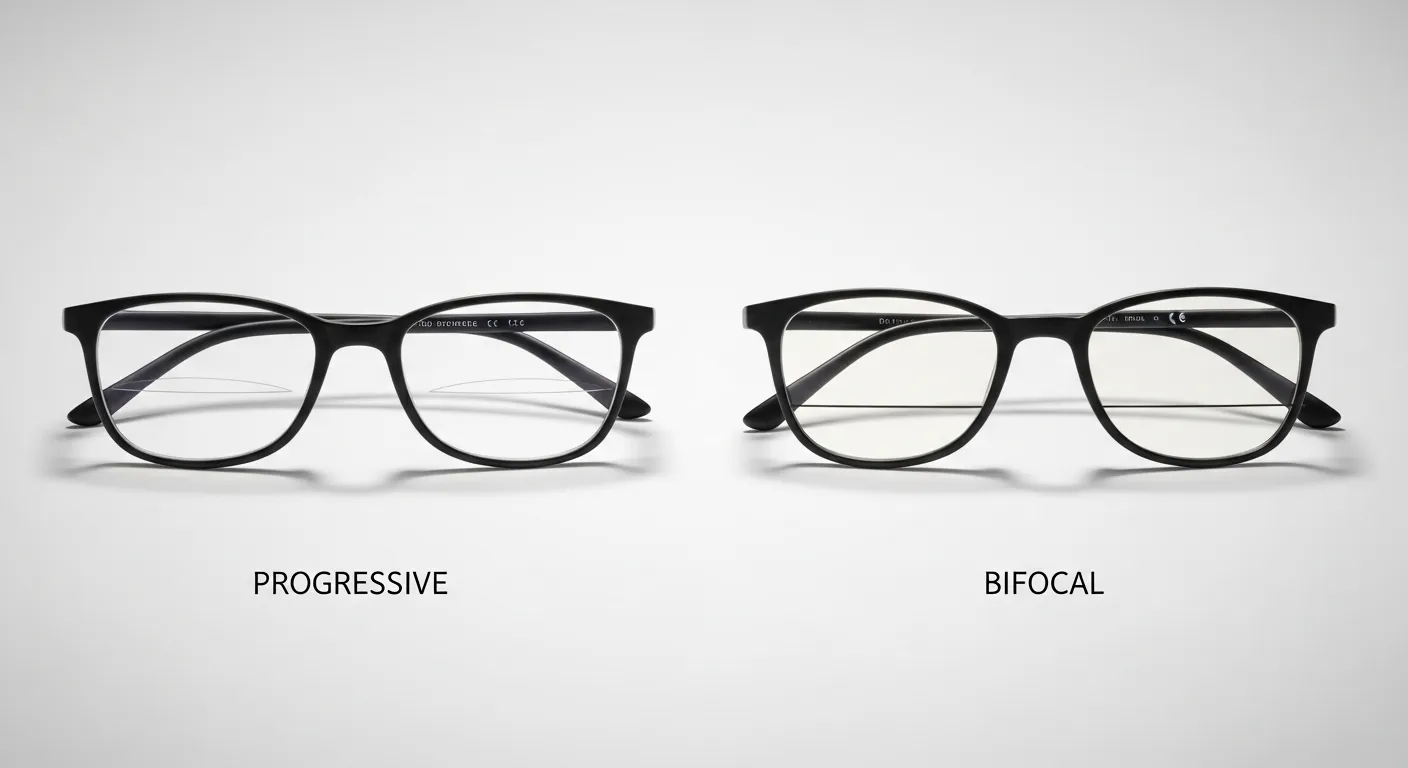
The main difference lies in design and vision transition. Progressives provide a gradual lens power change, while bifocals have distinct lens segments.
Why Knowing the Difference Matters
Understanding these differences is important for eye health, productivity, and societal awareness. Correct lens choice prevents eye strain, enhances learning and work efficiency, and ensures safety while driving or operating machinery. Experts and learners benefit by providing accurate prescriptions that suit lifestyle needs.
Difference Between Progressive and Bifocal
- Lens Design
- Progressive: Smooth gradient lens. Example: Reading a book while seeing the road clearly.
- Bifocal: Two distinct segments. Example: Top for distance, bottom for reading.
- Appearance
- Progressive: No visible lines. Example: Modern sleek glasses.
- Bifocal: Visible line. Example: Classic “grandparent style” frames.
- Adaptation
- Progressive: Takes time to adjust. Example: First-time wearer may feel dizziness.
- Bifocal: Easier to adapt. Example: Immediate clear vision for near and far.
- Vision Zones
- Progressive: Multiple vision zones. Example: Near, intermediate, and distance.
- Bifocal: Two zones. Example: Only near and far vision.
- Cost
- Progressive: More expensive. Example: Premium lens technology.
- Bifocal: Cheaper. Example: Affordable standard lens.
- Aesthetic Appeal
- Progressive: Looks modern. Example: Younger adults prefer it.
- Bifocal: Traditional look. Example: Older adults comfortable with classic style.
- Digital Use
- Progressive: Better for screen use. Example: Smooth intermediate distance for laptops.
- Bifocal: Limited intermediate use. Example: Strain when using tablets.
- Reading Comfort
- Progressive: Gradual focus adjustment. Example: Book, smartphone, and computer.
- Bifocal: Sharp transition. Example: May need head movement.
- Driving
- Progressive: Ideal for night driving. Example: Smooth distance transition.
- Bifocal: Can be tricky. Example: Switching focus may slow reaction.
- Prescription Flexibility
- Progressive: Customizable. Example: Lens power can be adjusted to lifestyle.
- Bifocal: Standard prescription. Example: Limited options for intermediate vision.
Nature and Behaviour
Progressive lenses – Smooth, modern, gradual transition, ideal for multitasking.
Bifocal lenses – Functional, traditional, clear zones, ideal for simple near-far vision needs.
Why People Are Confused
Both correct presbyopia, but progressive lenses are modern, and bifocals are classic. People confuse transition zones and adaptation requirements, leading to hesitation in choice.
Table: Difference and Similarity
| Feature | Progressive | Bifocal | Similarity |
| Lens Design | Gradient | Two distinct segments | Correct vision |
| Appearance | No lines | Visible line | Glasses type |
| Adaptation | Slow | Fast | Presbyopia correction |
| Vision Zones | Multiple | Two | Both for near & distance |
| Cost | Higher | Lower | Both commercially available |
| Digital Use | Good | Limited | Both help reading |
| Reading Comfort | Smooth | Sharp transition | Improves near vision |
| Driving | Smooth focus | Requires head movement | Both can be used for driving |
| Prescription Flexibility | Customizable | Standard | Both require optometrist |
| Aesthetic Appeal | Modern | Traditional | Both wearable |
Which is Better in What Situation?
- Progressive lenses suit professionals, students, and multitaskers. They allow smooth transitions between screens, books, and distance vision, enhancing comfort.
- Bifocal lenses are ideal for elderly users or those needing simple near and far correction without concern for intermediate tasks. They are cost-effective and easy to adapt.
Metaphors and Similes
- Progressive lenses: “Life in gradual focus like a river flowing smoothly.”
- Bifocal lenses: “Clear-cut vision like stepping stones across a stream.”
Connotation:
- Progressive: Positive – modern, sleek, efficient.
- Bifocal: Neutral – traditional, reliable.
Idioms / Proverbs Related
- “See things clearly” – relates to bifocal use.
- “Take it in stride” – progressive lens adjustment metaphor.
Literature References
- “The Age of Vision” – History, John Smith, 2010
- “Eyeglass Innovations” – Science, Mary Johnson, 2015
Movies
- “Through the Lens” – 2018, USA
- “Vision Matters” – 2021, UK
FAQs
- Are progressive lenses better than bifocals?
Progressive lenses are smoother but costlier; bifocals are simpler and cheaper. - Do bifocals cause headaches?
Sometimes, due to sharp transition between zones. - How long to adapt to progressive lenses?
Usually 1–2 weeks of continuous wear. - Can children use progressive lenses?
Rarely; usually prescribed for adults with presbyopia. - Which is ideal for computer work?
Progressive lenses offer better intermediate vision.
Usefulness in Surroundings
Both lenses reduce eye strain, improve daily productivity, and help navigate environments safely. Progressive lenses offer flexibility, bifocals offer clarity for near-far tasks.
Final Words
Understanding the difference between progressive and bifocal lenses ensures better eye care, comfort, and productivity. Choosing the right lens empowers visual clarity, enhancing life quality.
Conclusion
The difference between progressive and bifocal lies in design, vision zones, adaptation, and cost. Progressive lenses offer smooth transitions, ideal for modern lifestyles, while bifocals are simple, reliable, and cost-effective.
Both have unique advantages, helping seniors, professionals, and students alike. Knowledge of these lenses is essential for eye health, daily efficiency, and safe navigation.
By understanding their differences, you can make informed decisions, enhance visual comfort, and enjoy a clear and stress-free vision.
Choosing wisely between progressive and bifocal lenses improves lifestyle and ensures long-term eye care.

I am William Strunk Jr an American professor of English and the author of the classic style guide the Elements of Style. He emphasized clarity, brevity, and proper grammar in writing, influencing generations of writers. Learn more about his work and writing tips at wordrar.com.