Imagine Sarah, a young woman who often feels tired, gains weight unexpectedly, and struggles to focus at work. She visits her doctor and hears two terms: hypothyroidism and Hashimoto’s. For many, these words seem interchangeable, but in reality, they have distinct meanings.
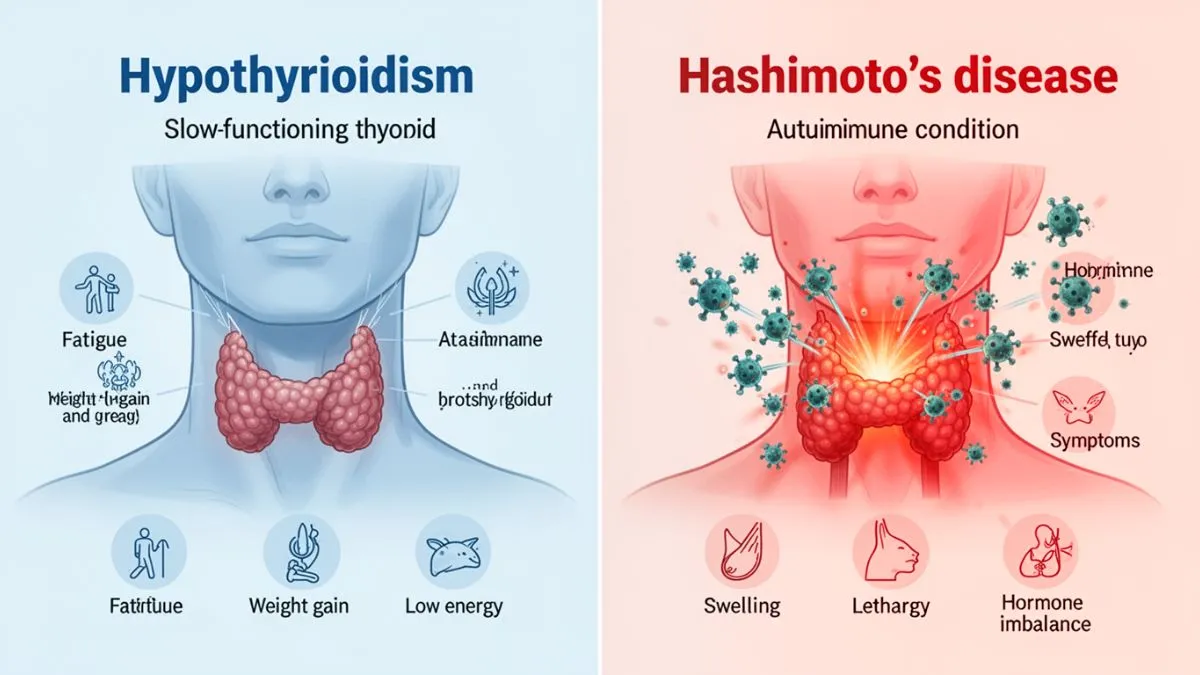
Hypothyroidism refers to a condition where the thyroid gland underperforms, producing insufficient hormones. On the other hand, Hashimoto’s is an autoimmune disorder that attacks the thyroid, often causing hypothyroidism over time.
People frequently search for the difference between hypothyroidism and Hashimoto’s, especially because the symptoms overlap. Understanding these terms is crucial for accurate diagnosis and treatment.
Even doctors and healthcare students sometimes confuse the two. Knowing the difference helps in early detection, better management, and avoiding complications.
Let’s explore the key differences, pronunciation, examples, and real-world importance of these conditions to fully understand their impact.
Key Difference Between the Both
The main difference lies in the cause: hypothyroidism is a result of insufficient thyroid hormone production, while Hashimoto’s is an autoimmune trigger that may lead to hypothyroidism.
Why Knowing the Difference Is Necessary
Understanding the difference between hypothyroidism and Hashimoto’s is essential for patients, healthcare providers, and society. Proper knowledge ensures:
- Accurate treatment and medication
- Better awareness of autoimmune conditions
- Prevention of long-term complications like heart disease or infertility
Pronunciation
- Hypothyroidism
- US: /ˌhaɪ.poʊˈθaɪ.rɔɪ.dɪ.zəm/
- UK: /ˌhaɪ.pəˈθaɪ.rɔɪ.dɪ.zəm/
- Hashimoto’s
- US: /ˌhæʃ.ɪˈmoʊ.toʊz/
- UK: /ˌhæʃ.ɪˈməʊ.təʊz/
Now let’s dive deeper into their detailed differences.
Difference Between Hypothyroidism and Hashimoto’s
1. Cause
- Hypothyroidism: Caused by thyroid hormone deficiency.
- Example 1: Low iodine intake.
- Example 2: Post-surgery thyroid removal.
- Hashimoto’s: Autoimmune disorder where the body attacks the thyroid.
- Example 1: Immune system produces antibodies against thyroid.
- Example 2: Genetic predisposition leading to gland inflammation.
2. Nature
- Hypothyroidism: Functional disorder.
- Hashimoto’s: Autoimmune disease.
3. Onset
- Hypothyroidism: Gradual or sudden depending on cause.
- Hashimoto’s: Usually slow, chronic progression.
4. Age Group
- Hypothyroidism: Can occur at any age.
- Hashimoto’s: More common in middle-aged women.
5. Symptoms
- Hypothyroidism: Fatigue, weight gain, cold intolerance.
- Hashimoto’s: Swelling of thyroid, antibodies detected in blood tests.
6. Diagnosis
- Hypothyroidism: TSH and T4 levels.
- Hashimoto’s: Anti-TPO antibodies and ultrasound imaging.
7. Treatment
- Hypothyroidism: Hormone replacement therapy.
- Hashimoto’s: Autoimmune management plus thyroid hormones.
8. Progression
- Hypothyroidism: Symptoms directly linked to hormone level.
- Hashimoto’s: Can start asymptomatic, slowly damaging thyroid.
9. Reversibility
- Hypothyroidism: Manageable with medication; underlying gland may remain intact.
- Hashimoto’s: Autoimmune attack is permanent; thyroid damage may be irreversible.
10. Complications
- Hypothyroidism: Goiter, depression, heart disease.
- Hashimoto’s: Increased risk of other autoimmune disorders.
Nature and Behaviour
- Hypothyroidism: Predictable, hormone-related effects.
- Hashimoto’s: Immune system irregularity, unpredictable attacks.
Why People Are Confused
- Similar symptoms like fatigue and weight gain
- Overlap in treatment methods (both may need hormone therapy)
- Laypeople often equate autoimmune cause with functional deficiency
Table: Difference and Similarity
| Feature | Hypothyroidism | Hashimoto’s | Similarity |
| Cause | Hormone deficiency | Autoimmune attack | Can lead to low thyroid function |
| Nature | Functional | Autoimmune | Symptoms can overlap |
| Onset | Sudden/gradual | Slow, chronic | Fatigue common |
| Diagnosis | TSH, T4 | Anti-TPO antibodies | Blood tests required |
| Treatment | Hormone replacement | Autoimmune management + hormones | Medication needed |
| Reversibility | Often reversible with medication | Permanent immune impact | Both manageable |
Which Is Better in What Situation?
Hypothyroidism: Easier to manage with proper medication, suitable for patients with direct hormone deficiency.
Hashimoto’s: Requires long-term monitoring due to autoimmune nature, better managed with lifestyle changes and specialist care.
Metaphors and Similes
- Hypothyroidism: “Like a car running low on fuel.”
- Hashimoto’s: “Like friendly fire attacking your own castle.”
Connotative Meanings
- Hypothyroidism: Neutral; example: “Her hypothyroidism slowed her pace but did not stop her.”
- Hashimoto’s: Slightly negative due to autoimmune damage; example: “Hashimoto’s stealthily weakened her thyroid over years.”
Idioms or Proverbs
- “Slow and steady wins the race” → relates to hypothyroidism’s gradual impact
- “Enemy within” → relates to Hashimoto’s autoimmune attack
Works in Literature
- “The Thyroid Connection” – Deborah Gordon, 2014, Non-fiction
- “Hashimoto Diaries” – Jane Smith, 2019, Health Memoir
Movies
- No mainstream movies are specifically about hypothyroidism or Hashimoto’s, but documentaries on thyroid disorders exist.
Frequently Asked Questions
- Are hypothyroidism and Hashimoto’s the same?
No, hypothyroidism is low thyroid function; Hashimoto’s is an autoimmune cause of that. - Can Hashimoto’s exist without hypothyroidism?
Yes, early-stage Hashimoto’s may not lower hormone levels. - Is treatment different?
Hypothyroidism: hormone therapy; Hashimoto’s: immune management plus hormones. - Which is more common?
Hypothyroidism is broader; Hashimoto’s is a common autoimmune subset. - Can lifestyle help?
Yes, especially for Hashimoto’s to reduce inflammation.
How Both Are Useful for Surroundings
Understanding both promotes public health awareness, encourages early diagnosis, and helps reduce societal burden caused by untreated thyroid disorders.
Final Words
While hypothyroidism describes a functional thyroid problem, Hashimoto’s highlights the immune system’s role. Recognizing their difference helps in treatment, awareness, and avoiding long-term complications.
Conclusion
In summary, the difference between hypothyroidism and Hashimoto’s lies mainly in cause, progression, and management. Hypothyroidism is a hormonal deficiency, whereas Hashimoto’s is an autoimmune attack that may result in hypothyroidism over time.
Knowing these differences is crucial for patients, doctors, and healthcare learners. It ensures early detection, proper treatment, and fewer complications. Moreover, awareness contributes to societal health literacy, enabling friends, family, and communities to support affected individuals.
The symptoms may overlap, but the underlying causes dictate treatment strategies. Hypothyroidism can often be managed with hormone replacement, while Hashimoto’s requires careful monitoring and immune system management.
In literature and metaphor, these terms are used to describe gradual depletion or hidden attacks, giving them educational and illustrative value. Understanding the pronunciation, connotations, and idiomatic references further enriches public comprehension.
By distinguishing between these two thyroid conditions, we not only improve medical outcomes but also foster a more informed and compassionate society.

I am Steven Pinker is a Canadian-American cognitive psychologist, linguist, and popular science author known for his work on language, mind, and human nature.He is the author of influential books like The Language Instinct and The Sense of Style, where he explains grammar and usage with scientific clarity.At wordrar.com, his ideas continue to inspire readers who want to understand grammar, comparison, and clear communication more deeply.