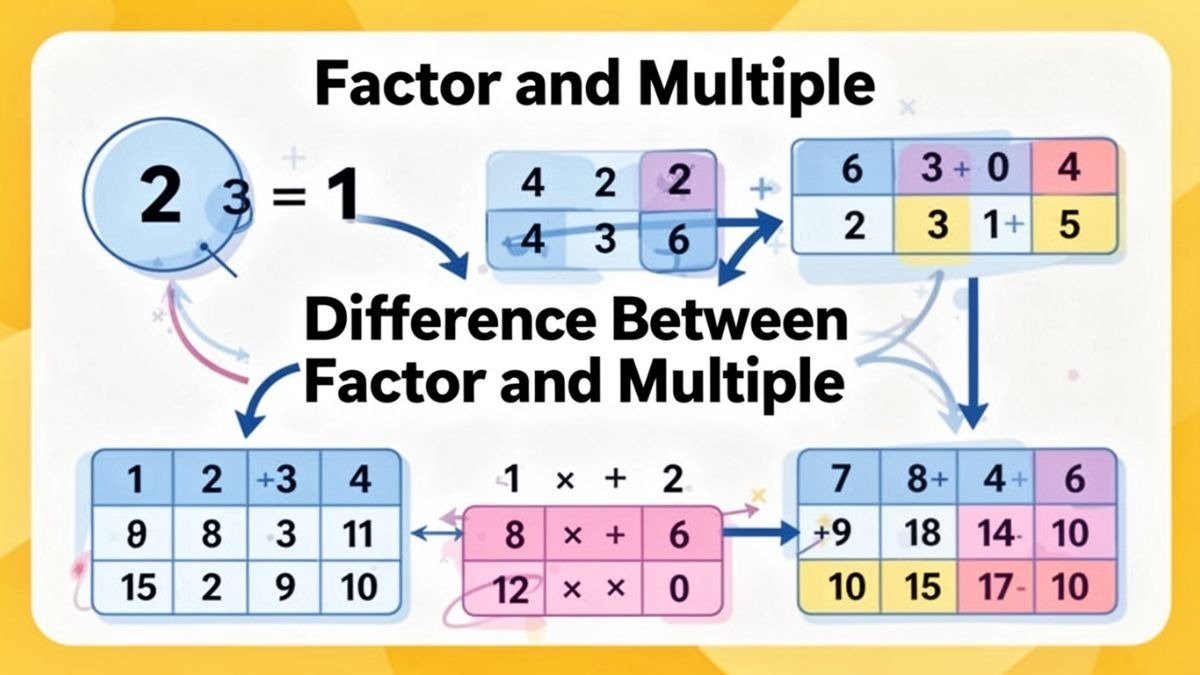
A teacher once asked a simple question in class: “What numbers can divide 12?”
Some students answered quickly, while others started writing possibilities. That moment introduced two powerful ideas in mathfactors and mu ltiples.
A factor is a number that divides another number exactly.
A multiple is a number you get when multiplying a number by another number. Simple idea, big impact.
Understanding the difference between factor and multiple helps students see how numbers connect and behave. It makes topics like fractions, algebra, and divisibility much easier.
Many learners confuse these terms because both relate to numbers interacting with each other. However, the difference between factor and multiple becomes clear when you see how division and multiplication work.
In mathematics, recognizing the difference between factor and multiple is essential for solving problems accurately. If in school exams or advanced calculations, mastering the difference between factor and multiple builds a strong mathematical foundation.
Key Difference Between the Both
The main difference between factor and multiple lies in their mathematical operation.
- A factor divides a number exactly without leaving a remainder.
- A multiple is produced by multiplying a number with another number.
In simple terms:
Factors come from division.
Multiples come from multiplication.
Why Their Difference Is Necessary to Know for Learners and Experts
Understanding the difference between factor and multiple is important for both students and professionals. In education, these concepts help learners grasp divisibility rules, prime numbers, and fractions.
For mathematicians and scientists, factors and multiples are essential in number theory, algebra, and computer algorithms. Engineers use them in coding logic, while statisticians rely on them in mathematical modeling.
Knowing the difference between factor and multiple also improves problem-solving skills. It helps individuals break large problems into smaller parts and understand numerical relationships more clearly.
Pronunciation of Both Terms
Factor
- US: /ˈfæk.tɚ/
- UK: /ˈfæk.tə/
Multiple
- US: /ˈmʌl.tə.pəl/
- UK: /ˈmʌl.tɪ.pəl/
Linking Hook
Now that we understand the basic meaning, let’s explore the difference between factor and multiple in detail through clear comparisons and examples.
Difference Between Factor and Multiple
1. Definition
Factor:
A number that divides another number completely.
Examples:
- Factors of 12 → 1, 2, 3, 4, 6, 12
- Factors of 10 → 1, 2, 5, 10
Multiple:
A number obtained by multiplying a number with integers.
Examples:
- Multiples of 5 → 5, 10, 15, 20
- Multiples of 3 → 3, 6, 9, 12
2. Mathematical Operation
Factor: Based on division.
Examples:
- 3 divides 12 → factor
- 4 divides 20 → factor
Multiple: Based on multiplication.
Examples:
- 4 × 3 = 12 → multiple
- 6 × 5 = 30 → multiple
3. Quantity
Factor: Finite number of factors.
Examples:
- Factors of 8 → 1, 2, 4, 8
- Factors of 9 → 1, 3, 9
Multiple: Infinite multiples.
Examples:
- Multiples of 2 → 2, 4, 6, 8, 10…
- Multiples of 7 → 7, 14, 21…
4. Size Compared to the Number
Factor: Usually smaller or equal to the number.
Examples:
- Factor of 20 → 5
- Factor of 15 → 3
Multiple: Usually larger than the number.
Examples:
- Multiple of 4 → 8
- Multiple of 6 → 18
5. Relationship Direction
Factor: Moves toward smaller numbers.
Examples:
- 16 → 1, 2, 4, 8, 16
- 18 → 1, 2, 3, 6, 9, 18
Multiple: Moves toward larger numbers.
Examples:
- 5 → 5, 10, 15, 20
- 9 → 9, 18, 27, 36
6. Use in Prime Numbers
Factor: Prime numbers have exactly two factors.
Examples:
- 7 → 1 and 7
- 11 → 1 and 11
Multiple: Prime numbers still have many multiples.
Examples:
- Multiples of 7 → 7, 14, 21
- Multiples of 11 → 11, 22, 33
7. Role in Fractions
Factor: Used for simplifying fractions.
Examples:
- 8/12 → divide by factor 4 → 2/3
- 6/9 → divide by factor 3 → 2/3
Multiple: Used to find common denominators.
Examples:
- Multiples of 3 → 3, 6, 9
- Multiples of 4 → 4, 8, 12
8. Mathematical Direction
Factor: Breaks numbers into parts.
Examples:
- 24 → 4 × 6
- 30 → 5 × 6
Multiple: Builds numbers into larger values.
Examples:
- 6 × 5 = 30
- 4 × 7 = 28
9. Use in LCM and HCF
Factor: Used to find HCF (Highest Common Factor).
Examples:
- HCF of 12 and 18 → 6
- HCF of 8 and 16 → 8
Multiple: Used to find LCM (Least Common Multiple).
Examples:
- LCM of 3 and 4 → 12
- LCM of 5 and 6 → 30
10. Concept Focus
Factor: Focus on divisibility.
Examples:
- 4 divides 16
- 5 divides 25
Multiple: Focus on growth through multiplication.
Examples:
- 3 × 8 = 24
- 7 × 4 = 28
Nature and Behaviour of Both
Factor:
Factors behave as building blocks of numbers. Every number can be broken into factors, which helps understand its internal structure.
Multiple:
Multiples represent expansion and repetition. They show how numbers grow when repeatedly multiplied.
Why People Are Confused About Their Use
People confuse factors and multiples because both involve relationships between numbers. They often appear together in topics like LCM, HCF, and divisibility.
Another reason is that the same numbers can appear in both lists. For example, 12 is a factor of 12 and also a multiple of 3 and 4.
Difference and Similarity Table
| Feature | Factor | Multiple |
| Meaning | Divides a number exactly | Result of multiplication |
| Operation | Division | Multiplication |
| Quantity | Finite | Infinite |
| Size | Smaller or equal | Usually larger |
| Direction | Breaking numbers | Growing numbers |
| Mathematical use | HCF, simplification | LCM, sequences |
Which Is Better in What Situation?
Factors in Problem Solving
Factors are better when breaking numbers into smaller components. They help in simplifying fractions, identifying prime numbers, and calculating the highest common factor. Students use factors when they want to understand the internal structure of numbers.
Multiples in Mathematical Expansion
Multiples are useful when numbers need to grow in sequences. They are essential when calculating least common multiples, solving time intervals, and creating numerical patterns. Multiples help when numbers must align in repeated cycles, such as scheduling or pattern recognition.
Metaphors and Similes
Factors and multiples often appear metaphorically in language.
Factor metaphor:
“Hard work was the factor behind her success.”
Multiple metaphor:
“His problems multiplied like multiples in math.”
Simile example:
“Opportunities grew like multiples of ten.”
Connotative Meaning
Factor – Neutral / Positive
Examples:
- “Education is an important factor in success.”
- “Weather was a factor in the delay.”
Multiple – Neutral
Examples:
- “The company faced multiple challenges.”
- “She had multiple talents.”
Idioms or Proverbs Related to the Words
Though not direct idioms, similar expressions exist.
“Many factors at play.”
Example: Many factors influenced the election results.
“Problems multiplied overnight.”
Example: After the storm, repair issues multiplied quickly.
Works in Literature Using the Words
- Multiple Intelligences – Psychology, Howard Gardner, 1983
- The Human Factor – Novel, Graham Greene, 1978
- Factor Analysis in Psychology – Academic Text, Charles Spearman, 1904
Movies Related to the Keywords
- The Human Factor – 1979, United Kingdom
- The Human Factor – 2021, United States documentary
Frequently Asked Questions
1. What is a factor in math?
A factor is a number that divides another number exactly without leaving a remainder.
2. What is a multiple in math?
A multiple is the result obtained by multiplying a number by integers.
3. Can a number be both a factor and a multiple?
Yes. For example, 12 is a factor of 12 and also a multiple of 3 and 4.
4. Are factors infinite?
No. Each number has a limited number of factors.
5. Are multiples infinite?
Yes. Multiples continue indefinitely because multiplication can continue forever.
How Both Are Useful for Surroundings
Factors and multiples are useful in daily life. Engineers use them in construction measurements, programmers use them in algorithms, and teachers use them in education. They help organize schedules, divide resources, and analyze patterns.
Final Words for Both
Factor and multiple are fundamental mathematical concepts that shape our understanding of numbers. One breaks numbers into parts, while the other builds them into larger patterns.
Conclusion:
Mathematics often looks complex, but its foundations are built on simple ideas. Factors and multiples are two of the most basic yet powerful concepts in number theory.
A factor helps us break numbers into smaller parts. This ability is important for simplifying fractions, understanding prime numbers, and solving divisibility problems. On the other hand, a multiple helps numbers grow through multiplication, creating patterns and sequences.
The difference between factor and multiple becomes clearer when we look at their operations. Factors rely on division, while multiples depend on multiplication. One moves inward to analyze numbers, while the other moves outward to expand them.
Understanding the difference between factor and multiple strengthens mathematical thinking. Students become better problem solvers, and experts gain deeper insight into number relationships.
In everyday life, these concepts also appear in scheduling, engineering calculations, and computer algorithms. Simple concepts, powerful applications.
When learners clearly grasp the difference between factor and multiple, they unlock a deeper appreciation of how numbers work together in the world of mathematics.
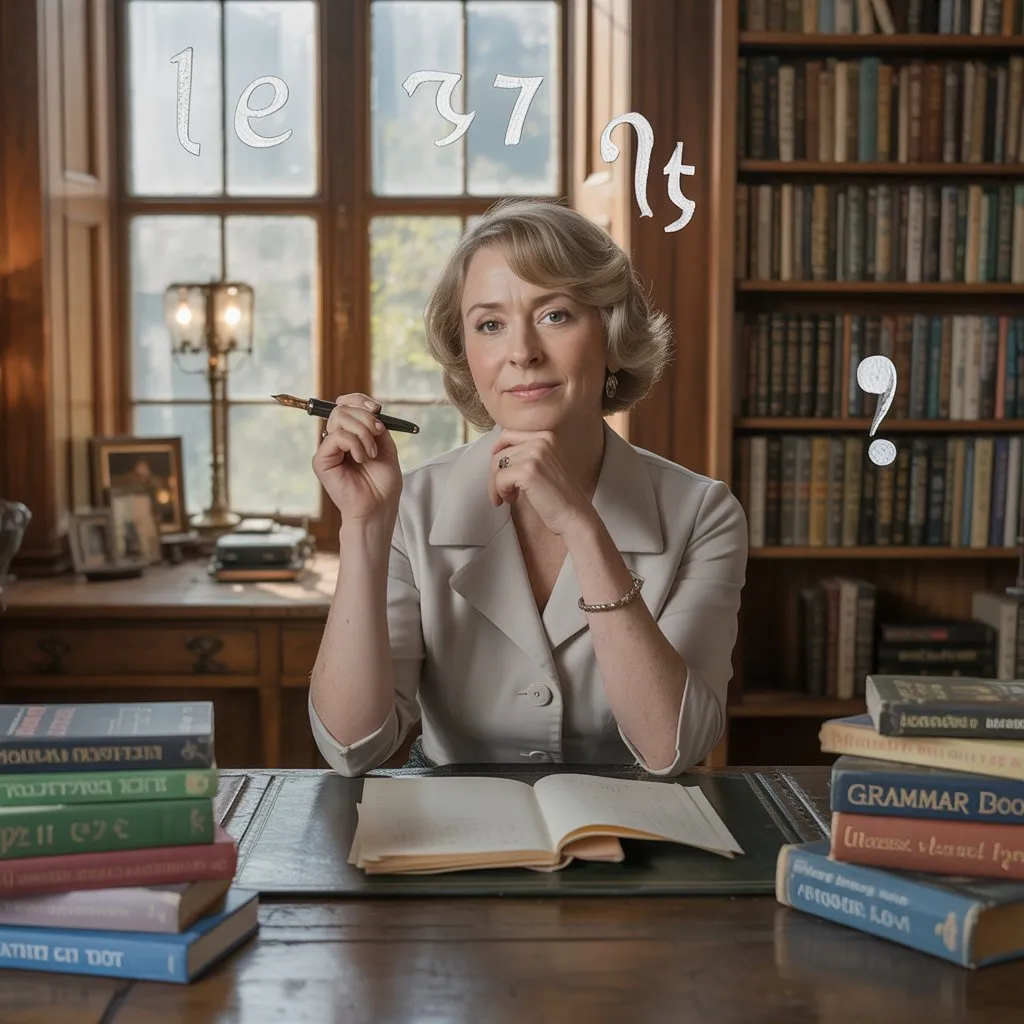
I am Lynne truss , journalist, and broadcaster best known for her bestselling grammar book Eats, Shoots & Leaves, which highlights the importance of punctuation in clear writing. Her engaging and witty style has made grammar accessible and entertaining for millions of readers worldwide.at wordrar.com, we admire her work for inspiring readers to appreciate the power of precise language and proper grammar.