Difference Between Customer and Consumer (Clear & Simple Guide)
A few days ago, I saw a man buying chocolates from a shop.
He paid the money, smiled, and left.
Later, I noticed he handed those chocolates to his kids.
That moment explained the difference between customer and consumer perfectly.
The customer is the one who purchases the product, while the consumer is the one who actually uses or consumes it.
This small distinction creates a big impact in business and daily life.
In many real-life situations, the customer and consumer can be the same person.
But often, they are different, and understanding this helps in marketing and communication.
The phrase difference between customer and consumer is essential for learners and professionals alike.
It helps businesses target the right audience effectively.
Knowing the difference between customer and consumer also improves decision-making.
It clarifies who to satisfy the buyer or the user.
Key Difference Between the Both
The main difference lies in role and purpose:
- A customer is someone who buys a product or service.
- A consumer is someone who uses or consumes the product.
Why Is Their Difference Necessary to Know?
Understanding the difference between customer and consumer is important because it shapes marketing strategies, product design, and customer satisfaction.
For learners, it builds a strong foundation in business and communication skills.
For experts, it helps in targeting the right audience and improving sales performance.
In society, this distinction ensures that both buyer needs and user satisfaction are fulfilled.
It also helps companies avoid confusion when designing products or campaigns.
Pronunciation (US & UK)
- Customer
- US: /ˈkʌstəmər/
- UK: /ˈkʌstəmə/
- Consumer
- US: /kənˈsuːmər/
- UK: /kənˈsjuːmə/
Linking Hook
Now that you understand the basics, let’s explore the difference between customer and consumer in detail with clear examples and practical insights.
Difference Between Customer and Consumer
1. Definition
- Customer: A person who buys goods or services.
- Example 1: A man buying groceries from a store.
- Example 2: A company purchasing software.
- Consumer: A person who uses the product.
- Example 1: A child eating the groceries.
- Example 2: An employee using the software.
2. Role
- Customer: Buyer
- Example 1: A parent buying toys.
- Example 2: A manager buying office chairs.
- Consumer: User
- Example 1: A child playing with toys.
- Example 2: Employees using chairs.
3. Relationship with Product
- Customer: Transaction-based
- Example 1: Paying for a meal.
- Example 2: Ordering clothes online.
- Consumer: Usage-based
- Example 1: Eating the meal.
- Example 2: Wearing the clothes.
4. Focus of Business
- Customer: Purchase decision
- Example 1: Discounts attract buyers.
- Example 2: Payment options influence choice.
- Consumer: Satisfaction
- Example 1: Taste of food matters.
- Example 2: Comfort of clothes matters.
5. Marketing Strategy
- Customer: Sales-oriented
- Example 1: Ads highlighting price.
- Example 2: Loyalty programs.
- Consumer: Experience-oriented
- Example 1: Product quality focus.
- Example 2: User experience design.
6. Decision Making
- Customer: Makes buying decisions
- Example 1: Choosing a brand.
- Example 2: Selecting a package.
- Consumer: Influences repeat buying
- Example 1: Liking a product.
- Example 2: Giving feedback.
7. Payment
- Customer: Pays money
- Example 1: Paying at checkout.
- Example 2: Online payment.
- Consumer: May not pay
- Example 1: Kids using toys.
- Example 2: Guests using products.
8. Identity
- Customer: Can be an individual or business
- Example 1: A retailer buying stock.
- Example 2: A company buying services.
- Consumer: Usually an individual
- Example 1: A person using a phone.
- Example 2: A person drinking juice.
9. Objective
- Customer: To purchase
- Example 1: Buying for resale.
- Example 2: Buying as a gift.
- Consumer: To use
- Example 1: Using a gift.
- Example 2: Consuming food.
10. Example Scenario
- Customer: A mother buying milk
- Example 1: Paying at the store.
- Example 2: Choosing a brand.
- Consumer: Child drinking milk
- Example 1: Drinking at breakfast.
- Example 2: Using it daily.
Nature and Behaviour
- Customer:
Customers are decision-makers. Their behavior is influenced by price, offers, and convenience. They focus on value for money. - Consumer:
Consumers are experience-driven. Their behavior depends on quality, satisfaction, and usability. They focus on comfort and benefit.
Why People Are Confused?
People often confuse these terms because sometimes the same person plays both roles.
For example, when you buy and eat your own food, you are both customer and consumer.
Table: Difference and Similarity
| Aspect | Customer | Consumer | Similarity |
| Meaning | Buyer | User | Both relate to products |
| Role | Purchases | Uses | Both part of market |
| Payment | Pays | May not pay | Both benefit |
| Focus | Buying decision | Usage experience | Both influence business |
Which Is Better in What Situation?
A customer is more important when the focus is on sales and revenue generation. Businesses must attract customers through pricing, offers, and promotions. Without customers, no purchase happens, so they are crucial for business survival.
A consumer is more important when the focus is on product success and satisfaction. If consumers are happy, they create demand and influence others. In the long run, satisfying consumers ensures growth and brand loyalty.
Metaphors and Similes
- Customer is like a gatekeeper who decides entry.
- Consumer is like a judge who decides success.
- “A customer is like a key, but a consumer is like the engine.”
Connotative Meaning
- Customer: Neutral (sometimes positive in business)
- Example: “The customer is always right.”
- Consumer: Neutral/Negative (overconsumption context)
- Example: “Modern consumers buy too much.”
Idioms / Proverbs
- “Customer is king”
- Example: Businesses treat buyers with respect.
- “You are what you consume”
- Example: Healthy eating shapes life.
Works in Literature
- The Consumer Society – Sociology, Jean Baudrillard, 1970
- Customer Centricity – Business, Peter Fader, 2012
Movies Related to the Theme
- Confessions of a Shopaholic (2009, USA)
- The Founder (2016, USA)
FAQs
1. Can a customer and consumer be the same person?
Yes, when someone buys and uses the same product.
2. Who is more important?
Both are important for business success.
3. Do consumers always pay?
No, sometimes they use products without paying.
4. Why is this difference important?
It helps in better marketing and product design.
5. What is the simplest way to remember?
Customer = Buyer, Consumer = User.
How Both Are Useful for Surroundings
Customers drive the economy through purchases, while consumers ensure product quality through usage and feedback. Together, they maintain balance in markets and society.
Final Words
Understanding the difference between customer and consumer helps in clear communication and smarter decisions.
Both play vital roles and should never be ignored.
Conclusion
The difference between customer and consumer may seem small, but it carries huge importance in business and everyday life. A customer brings revenue, while a consumer determines product success.
In many cases, one person can be both, but understanding their roles separately helps businesses design better strategies. Customers focus on buying decisions, whereas consumers focus on usage and satisfaction.
This distinction is especially important in marketing, where companies must decide whether to target the buyer or the end user. Ignoring this difference can lead to poor results, while understanding it can lead to stronger brands and loyal audiences.
In simple words:
Customer pays. Consumer uses.
And both together shape the success of any product or service.
Meta Description: Difference between customer and consumer explained with examples, table, and clear concepts for beginners and professionals.
Slug: difference-between-customer-and-consumer
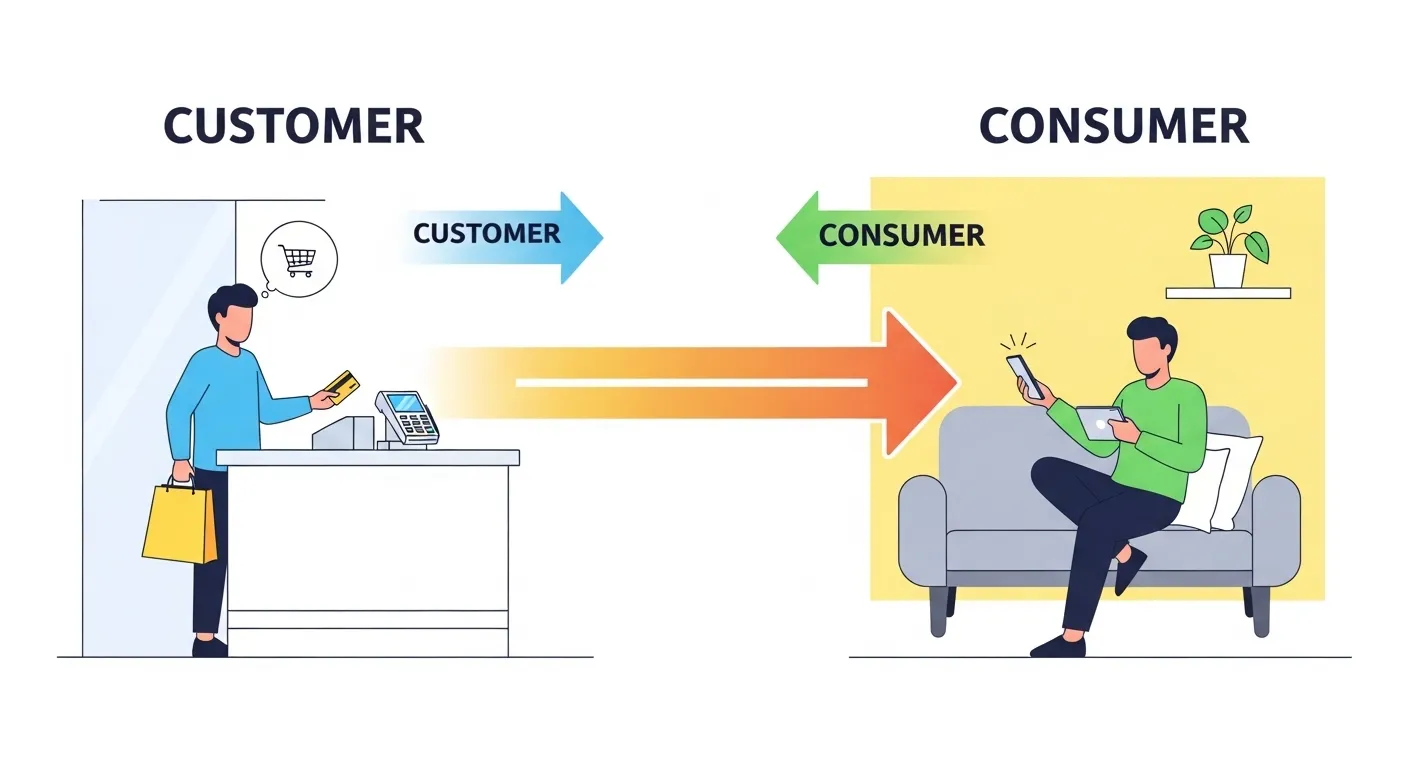
Image Prompt: Create a clean and professional illustration showing two roles: one person labeled “Customer” paying at a shop counter and another labeled “Consumer” using the product at home, with arrows and labels highlighting the difference between customer and consumer, modern flat design, bright colors, minimal background.A few days ago, I saw a man buying chocolates from a shop.
He paid the money, smiled, and left.
Later, I noticed he handed those chocolates to his kids.
That moment explained the difference between customer and consumer perfectly.
The customer is the one who purchases the product, while the consumer is the one who actually uses or consumes it.
This small distinction creates a big impact in business and daily life.
In many real-life situations, the customer and consumer can be the same person.
But often, they are different, and understanding this helps in marketing and communication.
The phrase difference between customer and consumer is essential for learners and professionals alike.
It helps businesses target the right audience effectively.
Knowing the difference between customer and consumer also improves decision-making.
It clarifies who to satisfy the buyer or the user.
Key Difference Between the Both
The main difference lies in role and purpose:
- A customer is someone who buys a product or service.
- A consumer is someone who uses or consumes the product.
Why Is Their Difference Necessary to Know?
Understanding the difference between customer and consumer is important because it shapes marketing strategies, product design, and customer satisfaction.
For learners, it builds a strong foundation in business and communication skills.
For experts, it helps in targeting the right audience and improving sales performance.
In society, this distinction ensures that both buyer needs and user satisfaction are fulfilled.
It also helps companies avoid confusion when designing products or campaigns.
Pronunciation (US & UK)
- Customer
- US: /ˈkʌstəmər/
- UK: /ˈkʌstəmə/
- Consumer
- US: /kənˈsuːmər/
- UK: /kənˈsjuːmə/
Linking Hook
Now that you understand the basics, let’s explore the difference between customer and consumer in detail with clear examples and practical insights.
Difference Between Customer and Consumer
1. Definition
- Customer: A person who buys goods or services.
- Example 1: A man buying groceries from a store.
- Example 2: A company purchasing software.
- Consumer: A person who uses the product.
- Example 1: A child eating the groceries.
- Example 2: An employee using the software.
2. Role
- Customer: Buyer
- Example 1: A parent buying toys.
- Example 2: A manager buying office chairs.
- Consumer: User
- Example 1: A child playing with toys.
- Example 2: Employees using chairs.
3. Relationship with Product
- Customer: Transaction-based
- Example 1: Paying for a meal.
- Example 2: Ordering clothes online.
- Consumer: Usage-based
- Example 1: Eating the meal.
- Example 2: Wearing the clothes.
4. Focus of Business
- Customer: Purchase decision
- Example 1: Discounts attract buyers.
- Example 2: Payment options influence choice.
- Consumer: Satisfaction
- Example 1: Taste of food matters.
- Example 2: Comfort of clothes matters.
5. Marketing Strategy
- Customer: Sales-oriented
- Example 1: Ads highlighting price.
- Example 2: Loyalty programs.
- Consumer: Experience-oriented
- Example 1: Product quality focus.
- Example 2: User experience design.
6. Decision Making
- Customer: Makes buying decisions
- Example 1: Choosing a brand.
- Example 2: Selecting a package.
- Consumer: Influences repeat buying
- Example 1: Liking a product.
- Example 2: Giving feedback.
7. Payment
- Customer: Pays money
- Example 1: Paying at checkout.
- Example 2: Online payment.
- Consumer: May not pay
- Example 1: Kids using toys.
- Example 2: Guests using products.
8. Identity
- Customer: Can be an individual or business
- Example 1: A retailer buying stock.
- Example 2: A company buying services.
- Consumer: Usually an individual
- Example 1: A person using a phone.
- Example 2: A person drinking juice.
9. Objective
- Customer: To purchase
- Example 1: Buying for resale.
- Example 2: Buying as a gift.
- Consumer: To use
- Example 1: Using a gift.
- Example 2: Consuming food.
10. Example Scenario
- Customer: A mother buying milk
- Example 1: Paying at the store.
- Example 2: Choosing a brand.
- Consumer: Child drinking milk
- Example 1: Drinking at breakfast.
- Example 2: Using it daily.
Nature and Behaviour
- Customer:
Customers are decision-makers. Their behavior is influenced by price, offers, and convenience. They focus on value for money. - Consumer:
Consumers are experience-driven. Their behavior depends on quality, satisfaction, and usability. They focus on comfort and benefit.
Why People Are Confused?
People often confuse these terms because sometimes the same person plays both roles.
For example, when you buy and eat your own food, you are both customer and consumer.
Table: Difference and Similarity
| Aspect | Customer | Consumer | Similarity |
| Meaning | Buyer | User | Both relate to products |
| Role | Purchases | Uses | Both part of market |
| Payment | Pays | May not pay | Both benefit |
| Focus | Buying decision | Usage experience | Both influence business |
Which Is Better in What Situation?
A customer is more important when the focus is on sales and revenue generation. Businesses must attract customers through pricing, offers, and promotions. Without customers, no purchase happens, so they are crucial for business survival.
A consumer is more important when the focus is on product success and satisfaction. If consumers are happy, they create demand and influence others. In the long run, satisfying consumers ensures growth and brand loyalty.
Metaphors and Similes
- Customer is like a gatekeeper who decides entry.
- Consumer is like a judge who decides success.
- “A customer is like a key, but a consumer is like the engine.”
Connotative Meaning
- Customer: Neutral (sometimes positive in business)
- Example: “The customer is always right.”
- Consumer: Neutral/Negative (overconsumption context)
- Example: “Modern consumers buy too much.”
Idioms / Proverbs
- “Customer is king”
- Example: Businesses treat buyers with respect.
- “You are what you consume”
- Example: Healthy eating shapes life.
Works in Literature
- The Consumer Society – Sociology, Jean Baudrillard, 1970
- Customer Centricity – Business, Peter Fader, 2012
Movies Related to the Theme
- Confessions of a Shopaholic (2009, USA)
- The Founder (2016, USA)
FAQs
1. Can a customer and consumer be the same person?
Yes, when someone buys and uses the same product.
2. Who is more important?
Both are important for business success.
3. Do consumers always pay?
No, sometimes they use products without paying.
4. Why is this difference important?
It helps in better marketing and product design.
5. What is the simplest way to remember?
Customer = Buyer, Consumer = User.
How Both Are Useful for Surroundings
Customers drive the economy through purchases, while consumers ensure product quality through usage and feedback. Together, they maintain balance in markets and society.
Final Words
Understanding the difference between customer and consumer helps in clear communication and smarter decisions.
Both play vital roles and should never be ignored.
Conclusion:
The difference between customer and consumer may seem small, but it carries huge importance in business and everyday life. A customer brings revenue, while a consumer determines product success.
In many cases, one person can be both, but understanding their roles separately helps businesses design better strategies. Customers focus on buying decisions, whereas consumers focus on usage and satisfaction.
This distinction is especially important in marketing, where companies must decide to target the buyer or the end user.
Ignoring this difference can lead to poor results, while understanding it can lead to stronger brands and loyal audiences.

I am Steven Pinker is a Canadian-American cognitive psychologist, linguist, and popular science author known for his work on language, mind, and human nature.He is the author of influential books like The Language Instinct and The Sense of Style, where he explains grammar and usage with scientific clarity.At wordrar.com, his ideas continue to inspire readers who want to understand grammar, comparison, and clear communication more deeply.