A few years ago, a traveler in Louisiana stood near a quiet waterway surrounded by thick trees and asked a local guide a simple question: “Is this a swamp or a bayou?” The guide smiled and explained that although both look similar, they are not the same.
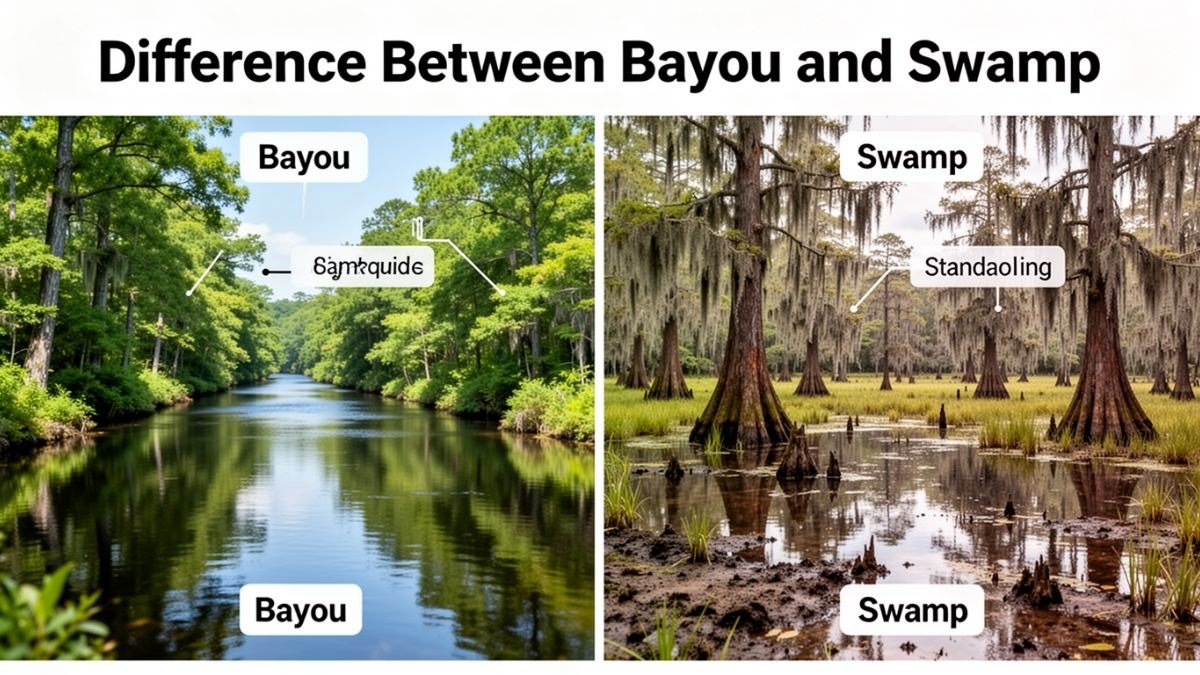
A bayou is usually a slow-moving or stagnant stream, often connected to rivers or lakes. It flows gently through flat land and is common in southern parts of the United States. The water moves slowly, but it still behaves like a natural channel.
A swamp, on the other hand, is a type of wetland dominated by trees and standing water. The water in swamps usually does not flow much and creates a thick, muddy ecosystem filled with plants and wildlife.
Understanding the difference between bayou and swamp helps people learn more about natural landscapes and ecosystems. Many travelers, students, and researchers often confuse them because they both contain water, vegetation, and wildlife.
In reality, the difference between bayou and swamp lies in water movement, structure, and ecological role. Knowing the difference between bayou and swamp allows learners and experts to better understand wetland environments and their importance.
Key Difference Between the Both
The main difference between bayou and swamp is that a bayou is a slow-moving water channel, while a swamp is a wetland ecosystem with standing water and trees.
- A bayou behaves like a small river or stream.
- A swamp is a water-logged land area filled with vegetation.
Why Their Difference Is Important for Learners and Experts
Knowing the difference between bayou and swamp is important in fields like geography, environmental science, and ecology. These landscapes play vital roles in maintaining biodiversity and protecting natural resources.
For students and researchers, understanding the difference helps them correctly identify ecosystems and study how water flows through landscapes.
For environmental experts, this knowledge is important for wetland conservation, wildlife protection, and flood control planning. Swamps filter water and support wildlife, while bayous act as natural waterways connecting rivers and lakes.
In society, both features help support fishing industries, tourism, and local cultures, especially in regions like Louisiana.
Pronunciation
Bayou
- US: /ˈbaɪ.uː/
- UK: /ˈbaɪ.uː/
Swamp
- US: /swɑːmp/
- UK: /swɒmp/
But how exactly do these two wetlands differ in structure, behavior, and ecological role? Let’s explore their differences in detail.
Difference Between Bayou and Swamp
1. Water Movement
Bayou:
A bayou usually has slow-moving water that flows gently through the land.
Examples:
- The water slowly flows toward nearby rivers.
- Boats can move through bayous because the water forms a channel.
Swamp:
A swamp typically has standing or stagnant water.
Examples:
- Rainwater collects and remains still for long periods.
- Floodwater may remain trapped among trees.
2. Geographic Structure
Bayou:
A bayou is shaped like a narrow water channel similar to a small river.
Examples:
- It may wind through forests and marshes.
- It often connects lakes and rivers.
Swamp:
A swamp is flat wetland land filled with water and plants.
Examples:
- Trees grow directly in the water.
- The ground remains muddy and flooded.
3. Vegetation
Bayou:
Plants usually grow along the banks of the waterway.
Examples:
- Moss-covered trees grow near the edges.
- Aquatic plants float in the water.
Swamp:
Vegetation grows inside the water itself.
Examples:
- Cypress trees grow in the flooded soil.
- Thick vines and shrubs cover the area.
4. Water Source
Bayou:
Water often comes from rivers, lakes, or slow streams.
Examples:
- Overflow from nearby rivers.
- Seasonal water from rain.
Swamp:
Water mainly comes from rainfall or flooding.
Examples:
- Heavy rainfall filling the wetland.
- Overflow from nearby rivers during floods.
5. Depth of Water
Bayou:
Water depth can vary but is usually deeper than swamps.
Examples:
- Boats can travel through it.
- Some sections are several feet deep.
Swamp:
Water is usually shallow.
Examples:
- People may walk through it in some places.
- Tree roots remain visible above the water.
6. Ecological Role
Bayou:
Bayous act as natural waterways.
Examples:
- Transport nutrients through wetlands.
- Provide routes for fish and aquatic life.
Swamp:
Swamps act as ecosystem filters.
Examples:
- Trees absorb pollutants from water.
- Wetlands store floodwater.
7. Wildlife
Bayou:
Animals depend on flowing water.
Examples:
- Fish and turtles live in bayou channels.
- Birds hunt along the banks.
Swamp:
Swamps host dense wildlife habitats.
Examples:
- Frogs and insects thrive in wetlands.
- Alligators and reptiles often live there.
8. Human Use
Bayou:
Humans use bayous for transportation and fishing.
Examples:
- Small boats travel through bayou waters.
- Fishermen catch fish from the channel.
Swamp:
Swamps are mostly used for wildlife conservation.
Examples:
- Protected wetlands for biodiversity.
- Areas used for ecological research.
9. Appearance
Bayou:
Looks like a calm river or stream.
Examples:
- Narrow water path with vegetation.
- Water flows slowly in a defined route.
Swamp:
Looks like a flooded forest.
Examples:
- Trees growing directly in water.
- Thick vegetation covering the area.
10. Location
Bayou:
Mostly found in southern United States, especially Louisiana.
Examples:
- Coastal wetlands.
- River delta regions.
Swamp:
Found in many tropical and temperate regions worldwide.
Examples:
- North America wetlands.
- Tropical forest wetlands.
Nature and Behaviour
Bayou Nature:
Bayous behave like slow natural waterways. Their gentle water flow supports aquatic life and connects different water systems. They often change shape over time as water gradually moves through them.
Swamp Nature:
Swamps behave like waterlogged forests. The water remains still and supports dense vegetation. These ecosystems store water, filter pollutants, and provide habitats for many animals.
Why People Are Confused About Their Use
People often confuse bayous and swamps because both contain water, plants, and wildlife. Movies, travel shows, and books sometimes use the terms interchangeably.
Another reason is that bayous often pass through swamps, making them appear like the same environment.
Difference and Similarity Table
| Feature | Bayou | Swamp | Similarity |
| Type | Water channel | Wetland ecosystem | Both contain water |
| Water Movement | Slow-flowing | Mostly stagnant | Wet environments |
| Vegetation | Mostly on banks | Trees grow in water | Rich plant life |
| Shape | Narrow channel | Flooded land | Natural landscapes |
| Wildlife | Fish and aquatic animals | Amphibians and reptiles | Support biodiversity |
Which Is Better in What Situation?
Bayou:
A bayou is better when a natural water route is needed. Its flowing water allows transportation, fishing, and water movement through wetlands. Communities near bayous benefit from fishing, boating, and tourism. Bayous also help distribute nutrients across ecosystems.
Swamp:
A swamp is better for ecological protection and biodiversity. Swamps store floodwater, reduce soil erosion, and provide habitats for many species. They are essential for environmental balance and water purification.
Use in Metaphors and Similes
Bayou Metaphor:
“His thoughts moved like a quiet bayou, slow but deep.”
Swamp Metaphor:
“She felt stuck in a swamp of problems.”
Connotative Meaning
Bayou (Neutral / Positive)
Often associated with calmness, mystery, and southern culture.
Example:
- “The quiet bayou created a peaceful atmosphere.”
Swamp (Often Negative but sometimes Neutral)
Sometimes symbolizes difficulty, confusion, or danger.
Example:
- “The project turned into a swamp of endless issues.”
Idioms or Proverbs
Swamp-related expressions
- “Drain the swamp”
Meaning: Remove corruption or problems.
Example: The leader promised to drain the swamp of corruption. - “Swamped with work”
Meaning: Extremely busy.
Example: She was swamped with work before the deadline.
(Bayou rarely appears in idioms.)
Works in Literature
- “Bayou Folk” – Short story collection, Kate Chopin, 1894
- “Swamplandia!” – Novel, Karen Russell, 2011
- “The Big Swamp” – Environmental history book, David C. Kelly, 2009
Movies Related to the Keywords
- Swamp Thing (1982, USA)
- Swamp Thing (2019, USA – TV series)
- The Skeleton Key (2005, USA – set in Louisiana bayous)
Frequently Asked Questions
1. Is a bayou the same as a swamp?
No. A bayou is a slow-moving water channel, while a swamp is a wetland ecosystem.
2. Where are bayous mostly found?
Bayous are mostly found in Louisiana and the southern United States.
3. Can a bayou exist inside a swamp?
Yes, sometimes a bayou flows through swampy areas.
4. Do both support wildlife?
Yes, both environments support rich biodiversity.
5. Which is deeper, a bayou or a swamp?
Usually, a bayou is deeper than a swamp.
How Both Are Useful for Surroundings
Bayous help transport water and nutrients, supporting fish and aquatic ecosystems. They also provide routes for small boats and help maintain wetland balance.
Swamps act as natural water filters and flood protectors. Their vegetation absorbs pollutants and protects nearby land from flooding.
Final Words
Both bayous and swamps are important natural environments. While they may appear similar, they serve different ecological roles. Learning the difference between bayou and swamp helps people understand the complexity of wetlands and their environmental value.
Conclusion
Wetlands are some of the most fascinating ecosystems on Earth, and bayous and swamps are two important parts of these environments. Although people often mix up the terms, understanding the difference between bayou and swamp reveals how unique each landscape truly is.
A bayou functions mainly as a slow-moving water channel, gently carrying water through flat landscapes and connecting rivers, lakes, and wetlands. It plays a role in transportation, fishing, and ecological balance. In contrast, a swamp is a waterlogged wetland ecosystem filled with trees and vegetation, where water usually remains still and supports diverse wildlife.
Both environments are incredibly valuable. Bayous help move water and nutrients, while swamps protect land from floods and provide habitats for many species. Together, they contribute to the health of wetland ecosystems and support both nature and human communities.
Understanding the difference between bayou and swamp is important for students, environmental scientists, and travelers alike. Small differences in geography can lead to big ecological impacts. By learning about these landscapes, people can better appreciate nature and help protect these fragile environments.

I am Steven Pinker is a Canadian-American cognitive psychologist, linguist, and popular science author known for his work on language, mind, and human nature.He is the author of influential books like The Language Instinct and The Sense of Style, where he explains grammar and usage with scientific clarity.At wordrar.com, his ideas continue to inspire readers who want to understand grammar, comparison, and clear communication more deeply.