Imagine running a retail store and seeing sales reports every week. The numbers tell a story, but do they reveal why certain products sell more? This is where understanding the difference between analytics and insights becomes crucial.
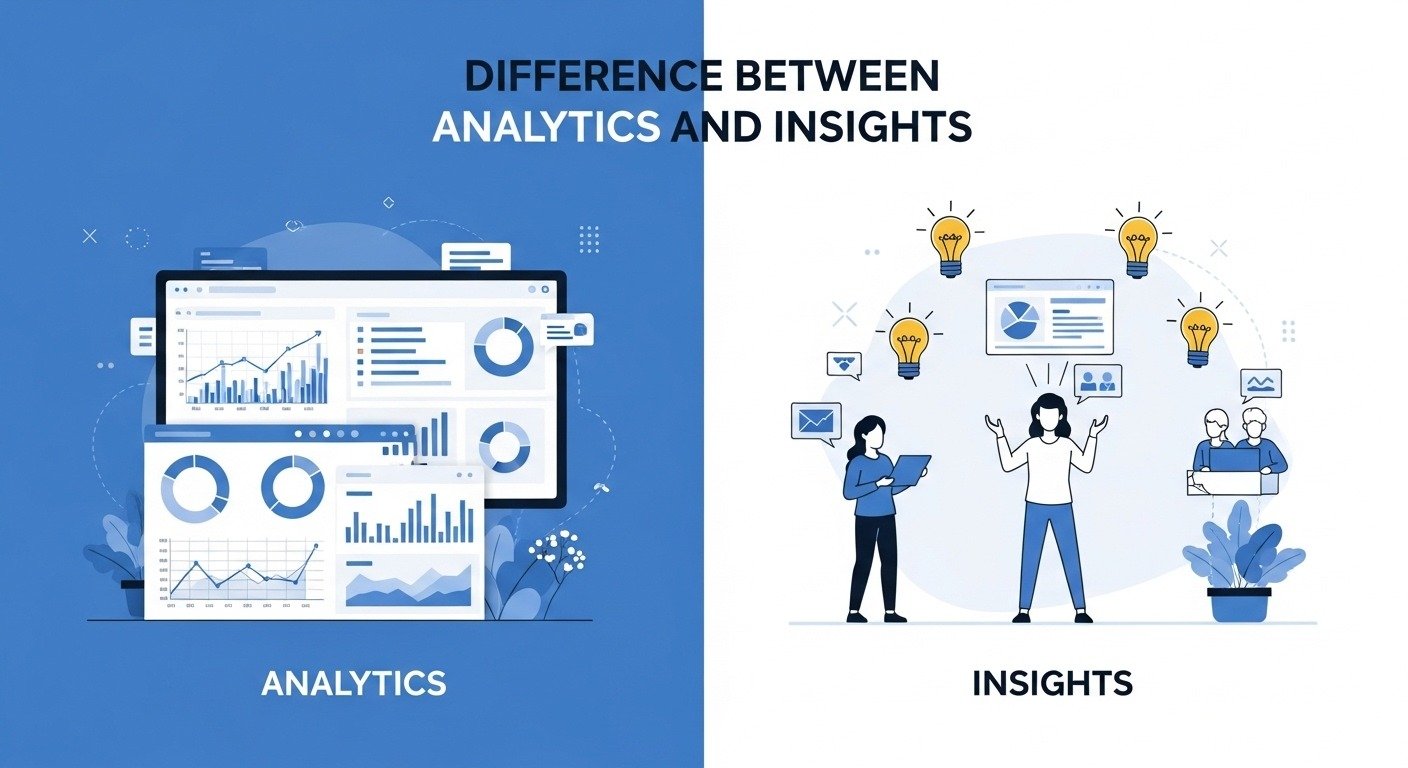
Analytics is all about collecting and examining raw data. It shows patterns, trends, and measurable metrics. On the other hand, insights interpret these patterns, helping businesses make actionable decisions.
Many professionals mix these terms, but the real power lies in knowing how analytics transforms into insights. Analytics answers what happened, while insights answer why it happened.
For learners and experts, distinguishing these two is vital to improve strategies, optimize resources, and make better choices. Without insights, analytics can be numbers without meaning, and without analytics, insights are guesses without evidence.
Difference Between Analytics and Insights
- Definition
- Analytics: The process of examining data to identify patterns.
- Insights: The meaningful interpretation of patterns to guide decisions.
Example 1: Analytics shows website traffic trends; insights reveal why users leave a page.
Example 2: Analytics lists top-selling products; insights explain why a product is popular.
- Purpose
- Analytics: Measure and track performance.
- Insights: Influence strategy and improve outcomes.
Example 1: Analytics reports email open rates; insights suggest email timing improvements.
Example 2: Analytics tracks customer reviews; insights reveal product improvement areas.
- Data vs Interpretation
- Analytics: Focuses on raw data.
- Insights: Focuses on actionable interpretation.
Example 1: Analytics shows 10,000 users visited a site; insights reveal which campaign drove visits.
Example 2: Analytics shows sales dipped; insights identify seasonal trends affecting sales.
- Time Orientation
- Analytics: Historical and present-focused.
- Insights: Future-focused recommendations.
Example 1: Analytics shows last month’s revenue; insights suggest next month’s marketing focus.
Example 2: Analytics records engagement rates; insights guide content creation strategy.
- Complexity
- Analytics: Can be technical with numbers and charts.
- Insights: Simple, understandable, and actionable.
Example 1: Analytics: “CTR increased by 20%.” Insight: “Users respond better to shorter headlines.”
Example 2: Analytics: “Bounce rate decreased 5%.” Insight: “Website navigation improvements worked.”
- Tools Used
- Analytics: Excel, Tableau, Google Analytics.
- Insights: Interpretation, brainstorming, business intelligence.
Example 1: Analytics collects survey responses; insights suggest product changes.
Example 2: Analytics monitors social media metrics; insights recommend posting schedule.
- Nature
- Analytics: Quantitative, objective.
- Insights: Qualitative, subjective.
Example 1: Analytics counts clicks; insights explains user motivation.
Example 2: Analytics calculates revenue; insights shows profitable customer segments.
- Skill Required
- Analytics: Data handling and technical skills.
- Insights: Critical thinking and domain expertise.
Example 1: Analyst identifies patterns; strategist creates actionable plans.
Example 2: Analytics identifies trends; insights help in decision-making.
- End Goal
- Analytics: Understanding data.
- Insights: Taking action and improving outcomes.
Example 1: Analytics shows survey satisfaction scores; insights help improve services.
Example 2: Analytics identifies popular products; insights plan marketing campaigns.
- Impact
- Analytics: Informative.
- Insights: Transformative and strategic.
Example 1: Analytics tells what content is popular; insights guide content strategy.
Example 2: Analytics shows traffic drop; insights suggest improvements to regain users.
Nature and Behavior
- Analytics: Systematic, structured, data-driven, objective.
- Insights: Intuitive, interpretive, creative, action-oriented.
Why People Are Confused
Many confuse the two because both deal with data. Analytics provides numbers, while insights provide meaning from numbers. Without context, raw data is often mistaken for insights.
Table: Difference and Similarity
| Feature | Analytics | Insights | Similarity |
| Nature | Quantitative, objective | Qualitative, interpretive | Both use data as base |
| Purpose | Measurement, reporting | Actionable guidance | Both help decision-making |
| Tools | Excel, Tableau, GA | Brainstorming, BI, expertise | Both improve business strategies |
| Time Orientation | Past & Present | Future-focused | Both influence planning |
| Skill Needed | Technical | Analytical + domain knowledge | Both require understanding |
Which is Better in What Situation?
- Analytics is better when you need data-driven reports or trend tracking. It’s perfect for metrics-focused decisions.
- Insights are better when action is needed. They help in strategic planning and solving complex problems where numbers alone cannot guide choices.
Metaphors and Similes
- Analytics is like a map showing where you are.
- Insights are like the compass guiding you forward.
Connotative Meaning
- Analytics: Neutral; example – “The analytics report shows user activity.”
- Insights: Positive; example – “Her insights transformed the business strategy.”
Idioms / Proverbs
- “Numbers don’t lie” – relates to analytics.
- “Knowledge is power” – relates to insights.
Works in Literature
- Data and Destiny – Non-fiction, John Doe, 2015 (Analytics focus)
- Insightful Minds – Non-fiction, Jane Smith, 2018 (Insights focus)
Movies on Keywords
- Moneyball (2011, US) – Analytics and insights in baseball strategy
- The Social Dilemma (2020, US) – Data analytics impact and societal insights
FAQs
- What is analytics?
- Examining raw data to find patterns.
- What is insight?
- Understanding the meaning behind data for action.
- Can analytics exist without insights?
- Yes, but it’s just data reporting without actionable value.
- Why is insight more important than analytics?
- Insights guide decision-making, making strategies effective.
- Do beginners confuse analytics with insights?
- Often, because both involve data. Understanding the purpose helps.
Usefulness in Surroundings
Analytics monitors trends and patterns in society, while insights help in policy-making, education, and business strategies. Together, they improve environments and decision-making efficiency.
Final Words
Both analytics and insights are essential in today’s data-driven world. Analytics collects and reports, while insights interpret and guide. Mastering both ensures informed decisions and meaningful strategies.
Conclusion:
Understanding the difference between analytics and insights is critical for learners and professionals alike.
Analytics provides the foundation with measurable data, while insights convert that data into meaningful actions.
Confusing the two can lead to misinformed decisions, wasted resources, and missed opportunities.
When used together, they create a powerful synergy: analytics shows what happened, and insights explain why it happened.
This combination is vital for business growth, societal development, and personal learning. Professionals who can extract insights from analytics are better equipped to drive change, innovate, and make strategic decisions.
In short, analytics is the map, insights are the compass, guiding decisions and ensuring outcomes are not just known, but understood.

I am Lynne truss , journalist, and broadcaster best known for her bestselling grammar book Eats, Shoots & Leaves, which highlights the importance of punctuation in clear writing. Her engaging and witty style has made grammar accessible and entertaining for millions of readers worldwide.at wordrar.com, we admire her work for inspiring readers to appreciate the power of precise language and proper grammar.