A small bakery opens in town. The owner pays for a colorful social media ad to promote a new cake flavor. At the same time, a local newspaper writes a story praising the bakery’s community service. Both spread the word, yet they work in very different ways. This real-life moment shows the difference between advertising and PR clearly.
In simple terms, advertising means paid promotion of products or services through media. Public relations (PR) focuses on building relationships and reputation through communication with the public and media. Both aim to influence people, but their methods differ.
The difference between advertising and PR often appears in control and credibility. Advertising allows full control over the message because it is paid. PR depends on media coverage, public opinion, and trust.
Many beginners confuse the two because both promote brands and organizations. However, the difference between advertising and PR lies in their goals—selling vs. shaping reputation.
Understanding the difference between advertising and PR helps students, marketers, and business owners choose the right strategy to reach people effectively.
Key Difference Between the Both
Advertising is paid communication aimed at promoting a product or service, while PR focuses on creating a positive image and maintaining relationships with the public through unpaid or earned media.
Why Their Difference Is Necessary to Know for Learners and Experts
Knowing the difference between advertising and PR is important because both play unique roles in communication and marketing.
Students of marketing learn how to combine persuasive promotion with reputation management. Experts understand when to use advertising for quick sales and PR for long-term credibility and trust.
In society, organizations rely on both tools to inform, persuade, and build relationships with the public. Understanding their differences helps professionals communicate more responsibly and effectively.
Pronunciation
- Advertising
- US: /ˈæd.vɚ.taɪ.zɪŋ/
- UK: /ˈæd.və.taɪ.zɪŋ/
- Public Relations (PR)
- US: /ˈpʌb.lɪk rɪˈleɪ.ʃənz/
- UK: /ˈpʌb.lɪk rɪˈleɪ.ʃənz/
But how exactly do advertising and PR differ in practice? Let’s explore the details.
Difference Between Advertising and PR
1. Paid vs Earned Media
Advertising is paid communication where companies buy space or time to show their message.
Examples
- A smartphone brand pays for a TV commercial.
- A clothing company runs Instagram ads.
PR relies on earned media and coverage from journalists or influencers.
Examples
- A news article reviews a new phone.
- A magazine features a fashion brand story.
2. Purpose
Advertising focuses mainly on selling products or services.
Examples
- A car company advertises discounts.
- A restaurant promotes a weekend deal.
PR focuses on building trust and reputation.
Examples
- A company sponsors charity events.
- A CEO gives an interview about sustainability.
3. Control Over Message
Advertising allows complete control over the content.
Examples
- A brand decides its slogan.
- A company chooses the visuals and timing.
PR messages depend on media interpretation.
Examples
- Journalists may edit a company statement.
- News outlets may add their analysis.
4. Credibility
Advertising is sometimes viewed with skepticism because it is paid.
Examples
- Consumers doubt exaggerated claims.
- People skip ads online.
PR often has higher credibility because it appears as news or expert opinion.
Examples
- A newspaper feature about a company.
- A trusted blogger reviewing a product.
5. Communication Style
Advertising uses persuasive language and slogans.
Examples
- “Buy one, get one free.”
- “The best phone of the year.”
PR uses informative and relationship-based communication.
Examples
- Press releases.
- Corporate statements.
6. Time Orientation
Advertising is often short-term and campaign-based.
Examples
- A holiday sale campaign.
- A product launch advertisement.
PR focuses on long-term reputation.
Examples
- Corporate social responsibility programs.
- Community engagement projects.
7. Audience Interaction
Advertising mainly broadcasts messages to audiences.
Examples
- TV commercials.
- Online banner ads.
PR involves two-way communication.
Examples
- Press conferences.
- Public feedback events.
8. Cost Structure
Advertising usually requires significant financial investment.
Examples
- National TV ads costing millions.
- Large digital ad campaigns.
PR often costs less but requires strategic communication efforts.
Examples
- Writing press releases.
- Media relations management.
9. Measurement
Advertising success is measured through sales and ad metrics.
Examples
- Click-through rates.
- Conversion rates.
PR success is measured through public perception and media coverage.
Examples
- Positive news mentions.
- Brand reputation surveys.
10. Ownership of Media
Advertising uses owned or purchased media space.
Examples
- Paid billboards.
- Sponsored posts.
PR relies on third-party platforms.
Examples
- News coverage.
- Independent blogs.
Nature and Behaviour of Both
Advertising has a persuasive and promotional nature. Its behavior focuses on direct influence and consumer action. It uses attractive visuals, slogans, and emotional appeals to encourage purchases.
Public relations, however, behaves more like relationship management. Its nature is informative, strategic, and reputation-focused. PR builds trust by maintaining communication between organizations and the public.
Why People Are Confused About Their Use
People often confuse advertising and PR because both promote brands and communicate messages.
Another reason is that modern marketing mixes both strategies. For example, a company might run ads while also gaining media coverage, making it difficult to separate their roles.
Table Showing Difference and Similarity
| Aspect | Advertising | Public Relations | Similarity |
| Cost | Paid | Mostly unpaid | Both require resources |
| Goal | Promote sales | Build reputation | Both influence public opinion |
| Control | High control | Limited control | Both shape brand image |
| Credibility | Lower | Higher | Both affect trust |
| Media | Paid media | Earned media | Both use media channels |
Which Is Better in What Situation?
Advertising is better when companies want immediate visibility and sales. For example, during product launches, seasonal promotions, or limited-time offers, advertising quickly reaches large audiences and encourages direct action.
Public relations is better for long-term trust and reputation building. Organizations use PR during crises, community projects, or brand storytelling to build goodwill and credibility among the public.
Use in Metaphors and Similes
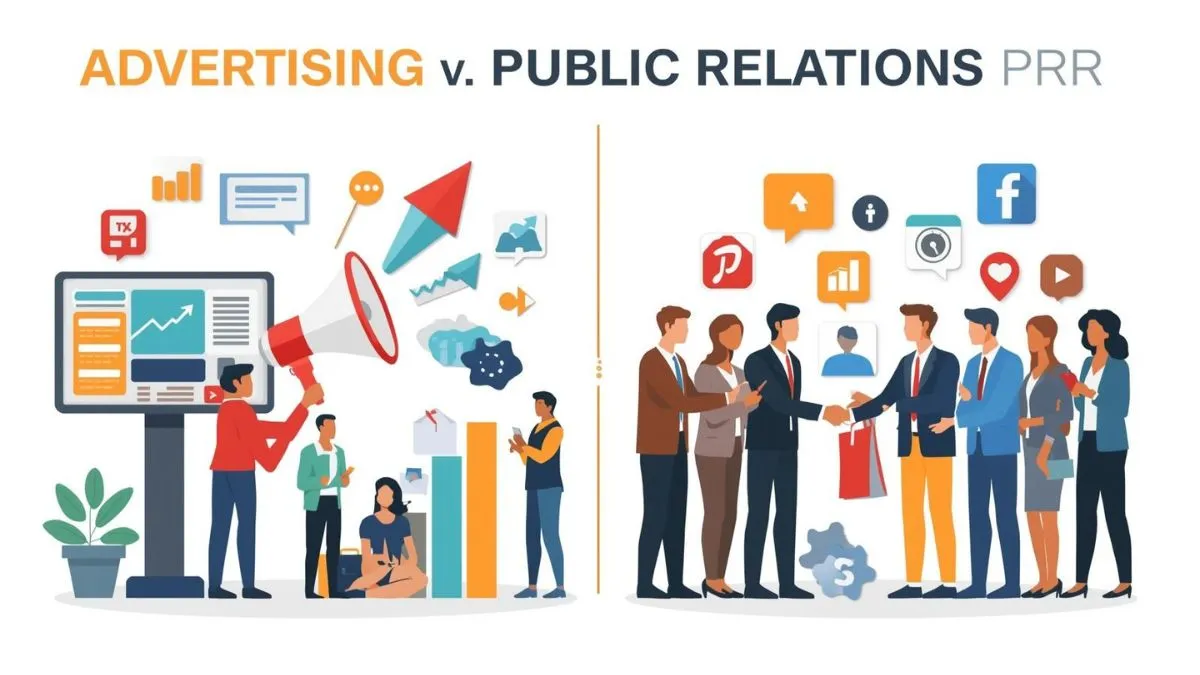
Advertising is sometimes compared to a loud megaphone because it directly announces messages to the public.
PR is often described as a bridge because it connects organizations with communities and builds understanding.
Connotative Meaning
Advertising
- Positive: creativity, promotion, opportunity
- Negative: exaggeration, manipulation
- Neutral: marketing communication
Example:
- “Creative advertising made the brand famous.”
PR
- Positive: trust, transparency
- Negative: image manipulation
- Neutral: public communication
Example:
- “Strong PR helped the company regain public confidence.”
Idioms or Expressions Related to the Words
- “Good publicity is half the battle.”
Example: A startup gained attention because good publicity brought investors. - “Word of mouth travels fast.”
Example: Positive PR made the brand popular quickly.
Works in Literature Featuring the Themes
- The Hidden Persuaders — Non-fiction, Vance Packard, 1957
- Trust Me, PR Is Dead — Non-fiction, Robert Phillips, 2015
- Ogilvy on Advertising — Marketing literature, David Ogilvy, 1983
Movies Related to Advertising or PR
- What Women Want — 2000, USA
- Thank You for Smoking — 2005, USA
- The Joneses — 2009, USA
Frequently Asked Questions
1. What is the main difference between advertising and PR?
Advertising is paid promotion, while PR focuses on reputation and relationships.
2. Is PR cheaper than advertising?
Usually yes, because it relies on earned media rather than paid placements.
3. Can a company use both advertising and PR together?
Yes. Most organizations combine both for effective marketing strategies.
4. Which builds more credibility?
PR generally builds more credibility because media coverage appears unbiased.
5. Which works faster for sales?
Advertising usually produces faster results for sales campaigns.
How Both Are Useful for Surroundings
Advertising informs society about products, services, and opportunities. It also supports economic growth by helping businesses reach customers.
PR strengthens trust and communication between organizations and communities. It helps manage crises, promote social responsibility, and encourage public awareness.
Final Words for Both
Advertising and PR are not competitors; they are complementary tools. When used together, they create both visibility and credibility, which are essential for successful communication.
Conclusion:
Understanding the difference between advertising and PR is essential in today’s communication-driven world. Both tools influence how organizations connect with people, but they operate in distinct ways.
Advertising focuses on paid promotion and immediate impact. It allows companies to control their message and directly persuade audiences to buy products or services. Businesses rely on advertising when they need quick visibility and strong marketing campaigns.
Public relations, however, builds long-term trust and reputation. Through media relations, storytelling, and community engagement, PR creates a positive image and strengthens relationships between organizations and society.
Although the difference between advertising and PR is clear, successful communication often requires using both together. Advertising attracts attention, while PR builds credibility and goodwill.
In the modern world of digital media and global communication, understanding these two concepts helps professionals make smarter marketing decisions and stronger public connections. When combined effectively, advertising and PR can create powerful influence, lasting trust, and meaningful engagement

I am Lynne truss , journalist, and broadcaster best known for her bestselling grammar book Eats, Shoots & Leaves, which highlights the importance of punctuation in clear writing. Her engaging and witty style has made grammar accessible and entertaining for millions of readers worldwide.at wordrar.com, we admire her work for inspiring readers to appreciate the power of precise language and proper grammar.